
It was May of 2022. This turned into a fun project, even though it was never supposed to happen. Let me jog my memory and tell you the story the best I can.
The car basically came with a pile of E30 parts I was buying from a neighboring town. It was one of those “since you’re already here, I’ll throw the car in for X amount” kind of deals. That X amount ended up being $300.
At that price, it was a no-brainer.
At the time, I didn’t own a trailer. So I rented a U-Haul dolly and headed east to the small North Idaho town of Osburn.
The car was parked in an alley on the north side of a mountain, buried under about a foot of snow. Weeds and grass mixed in with the snowpack that would’ve been five feet tall in the summer surrounded the dirt and moss-covered shell of a car.
We dragged it out with a winch and a four-wheeler, which honestly wasn’t too bad considering it didn’t even have an engine or transmission in it.
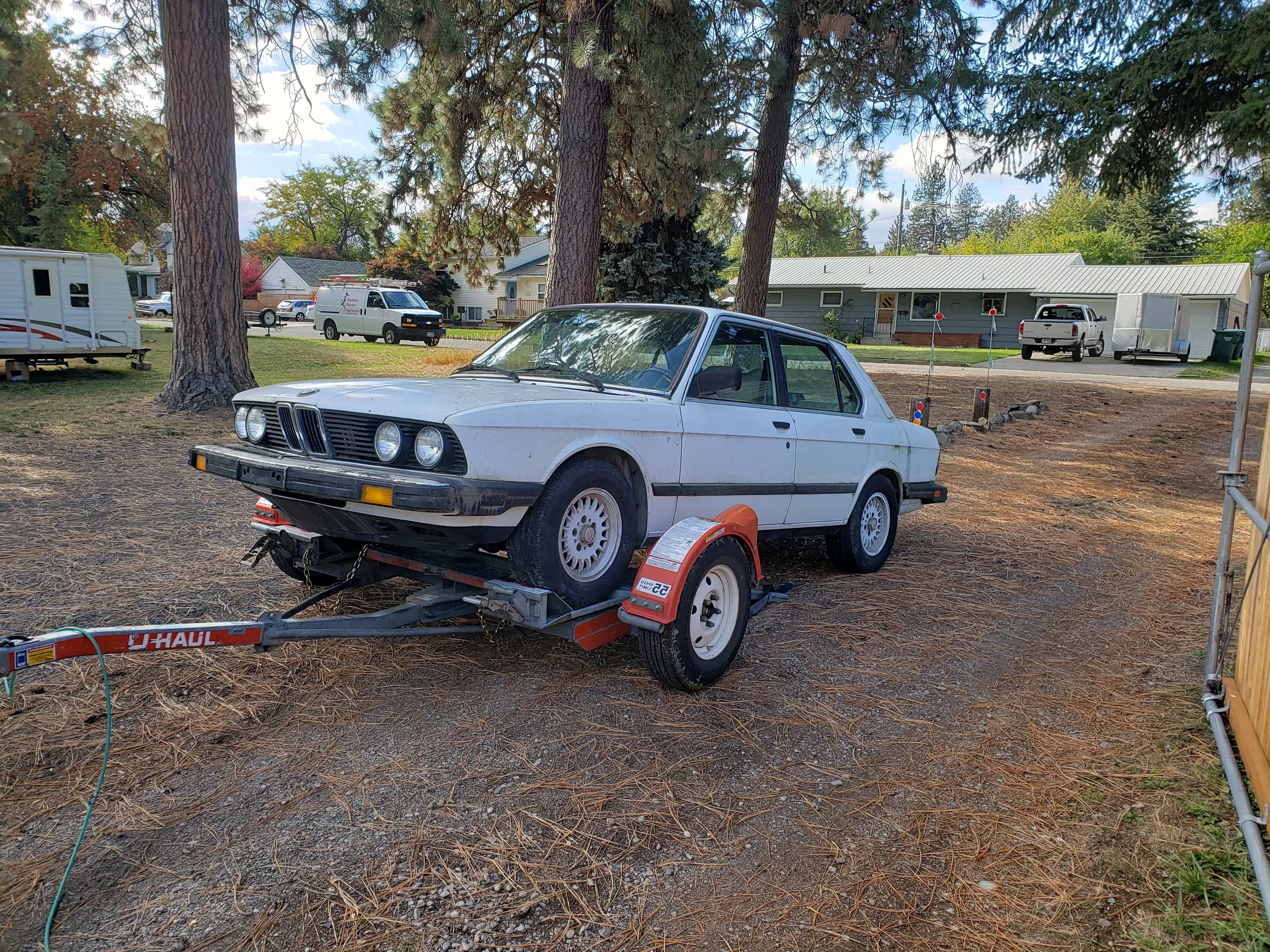
Once I got the car home, my plan was simple: clean up this clean-titled 1986 524d rolling chassis and make it presentable enough to sell “as is” to someone willing to take on the task of putting it back on the road.
The car did have some rust, but I didn’t feel like it was beyond saving. Parting it out was definitely an option… but it just didn’t sit right with me.
Even though I don’t currently own an E28, I’ve had a few over the years, and they’ve always been one of my favorite chassis.
Side note: my absolute bucket list dream car is a black-on-tan E28 M5.
Here are a few photos of the car after I cleaned it up.
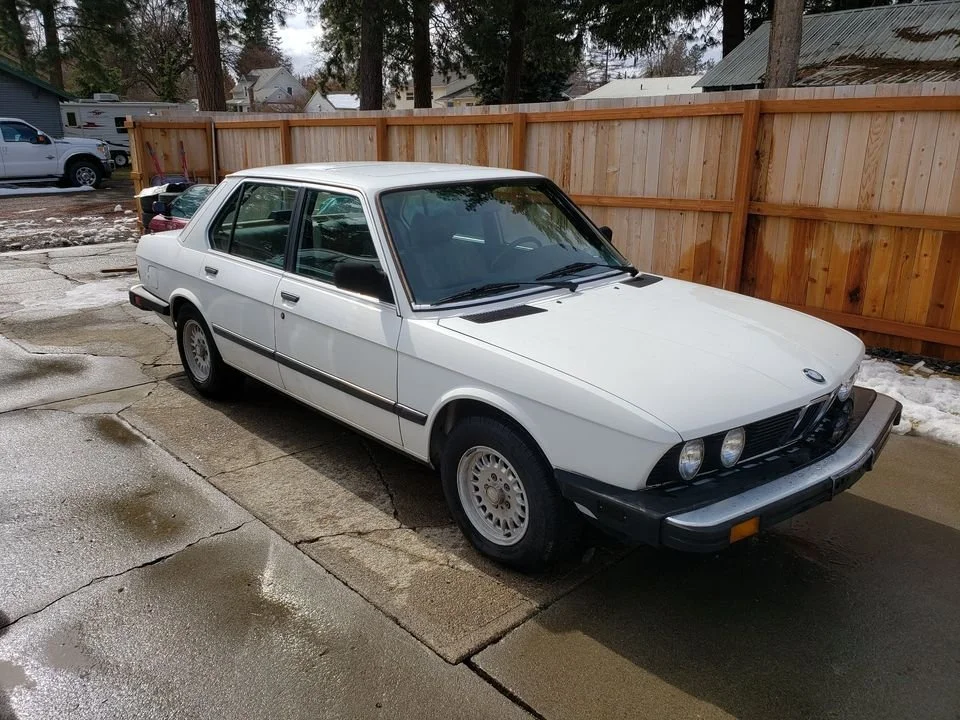
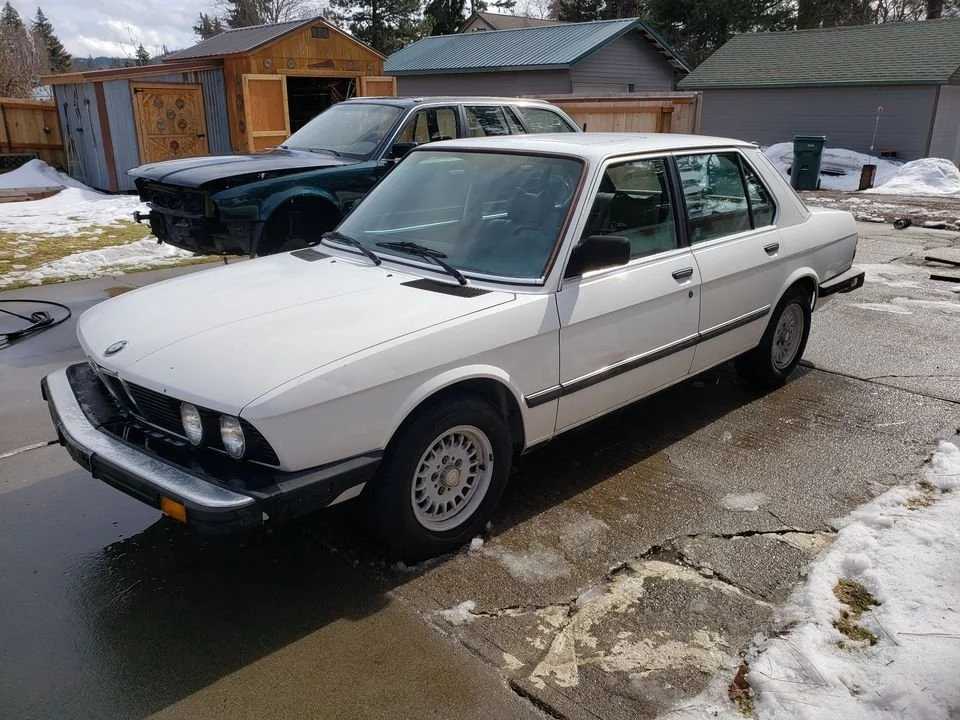
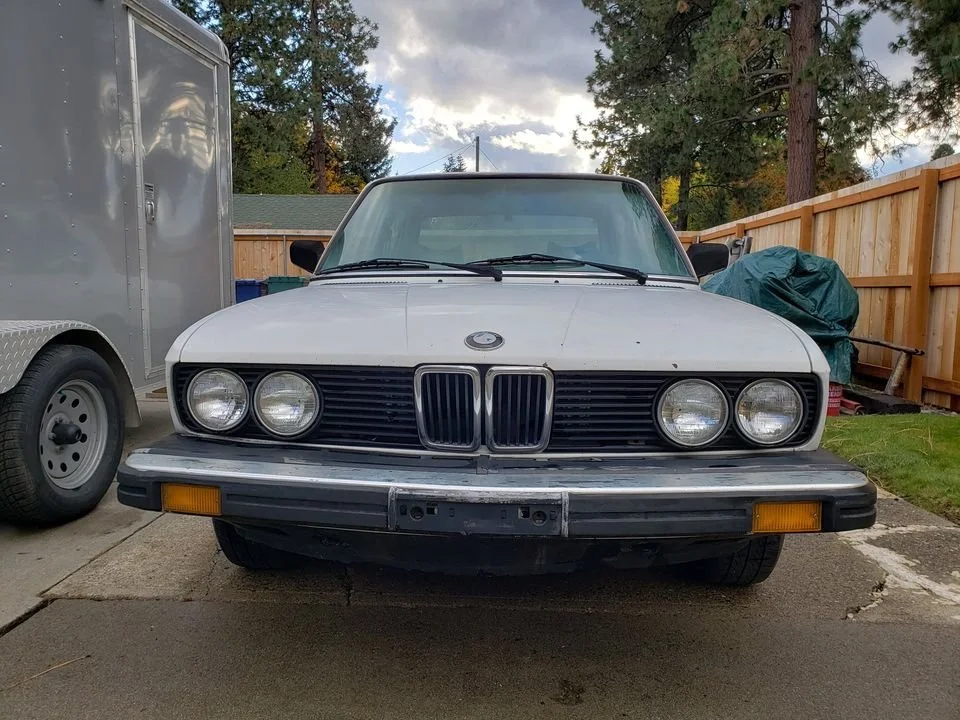
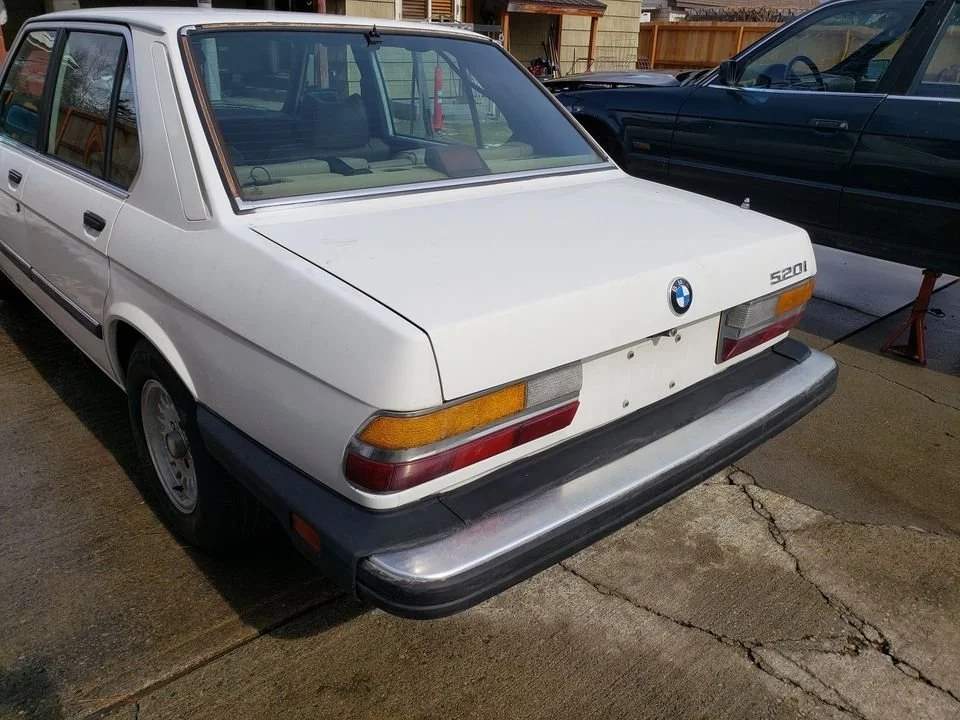
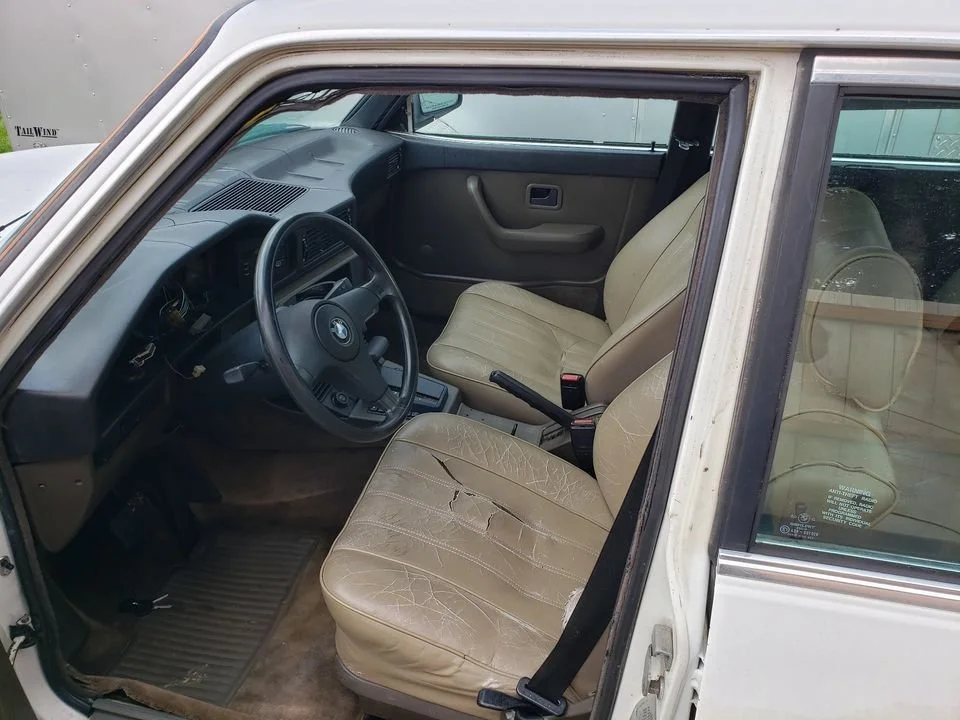
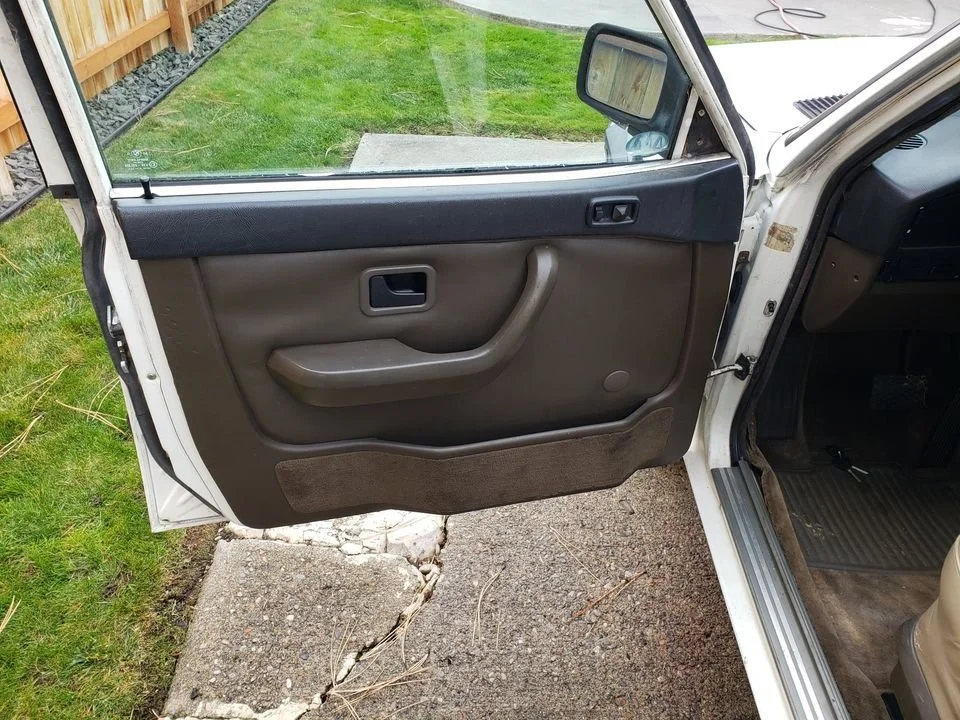
Not bad, right?
After I got the car cleaned up and photographed, I listed it on Facebook Marketplace. We had plenty of messages… but no sale.
There it sat — listed on Marketplace and Craigslist for almost a year. Yes, you read that right. A year.
No one had any real interest, even at the low price of $500. I even offered to deliver it anywhere in the PNW for a small fee.
Why? Who knows. Beats me. I guess I’m just a little biased when it comes to the legendary E28 chassis.
That’s when I came to the realization, the only way I was going to force a sale was to make the car drive under its own power.
So that’s exactly what I did.
I could’ve made things easy on myself and sourced a stock M20 with everything needed to keep it plug-and-play. But I just happened to have a non-VANOS M50 sitting on an engine stand that I had recently traded a set of ripped-up E30 sport seats for.
And the best part? The engine came with everything needed to make it run.
I also had a G260 5-speed from a 325is part-out, along with the slightly longer E30 318i manual driveshaft — which ended up being a perfect fit for the swap.
Talk about lucky.
The last key component I needed to make this happen was an E34 oil pan setup for the M50 — including the oil pan, dipstick, and pickup tube.
Which, thankfully, I had on hand as well.
I’m really glad I had all these parts sitting around. If I didn’t, I probably would’ve ended up parting the car out.
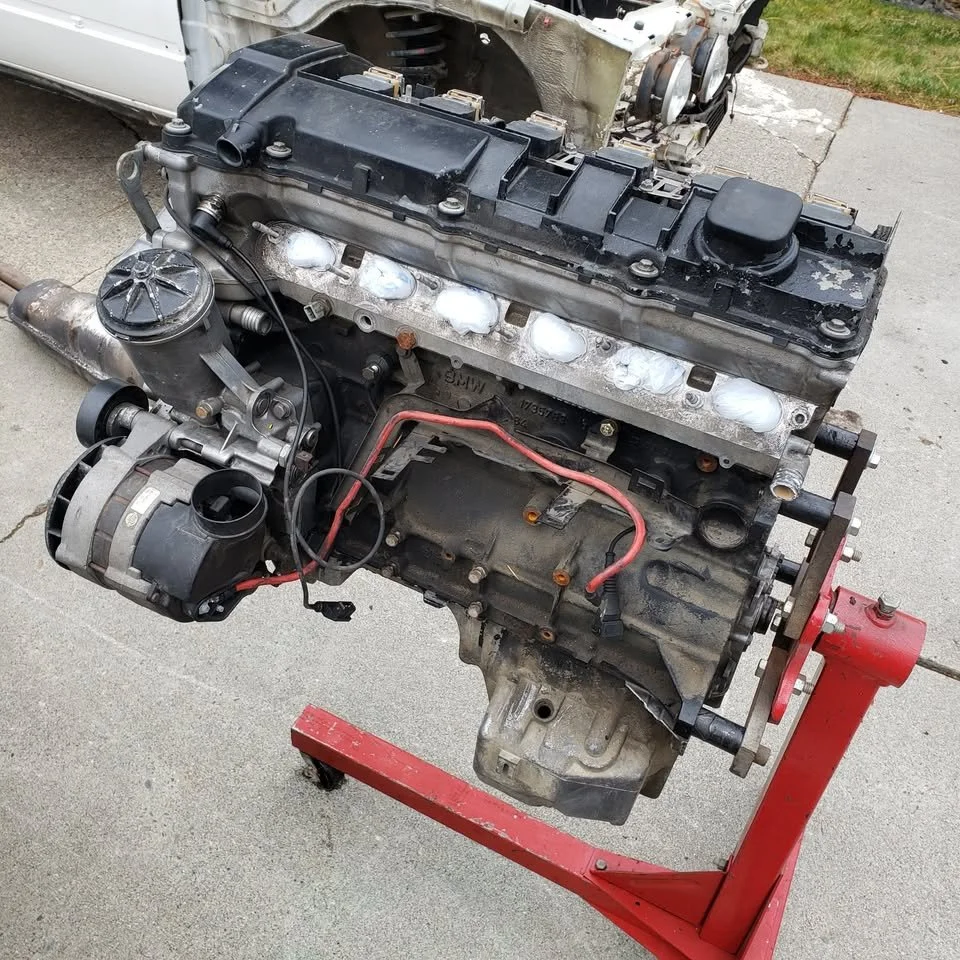
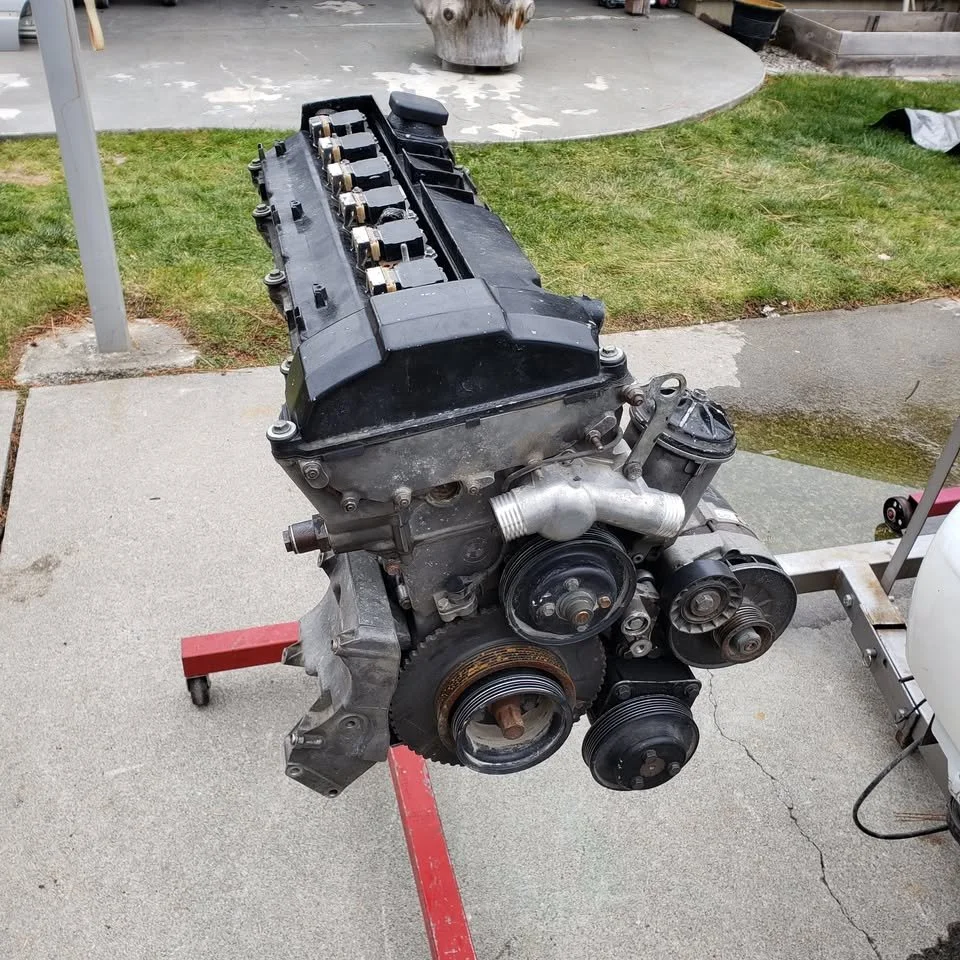
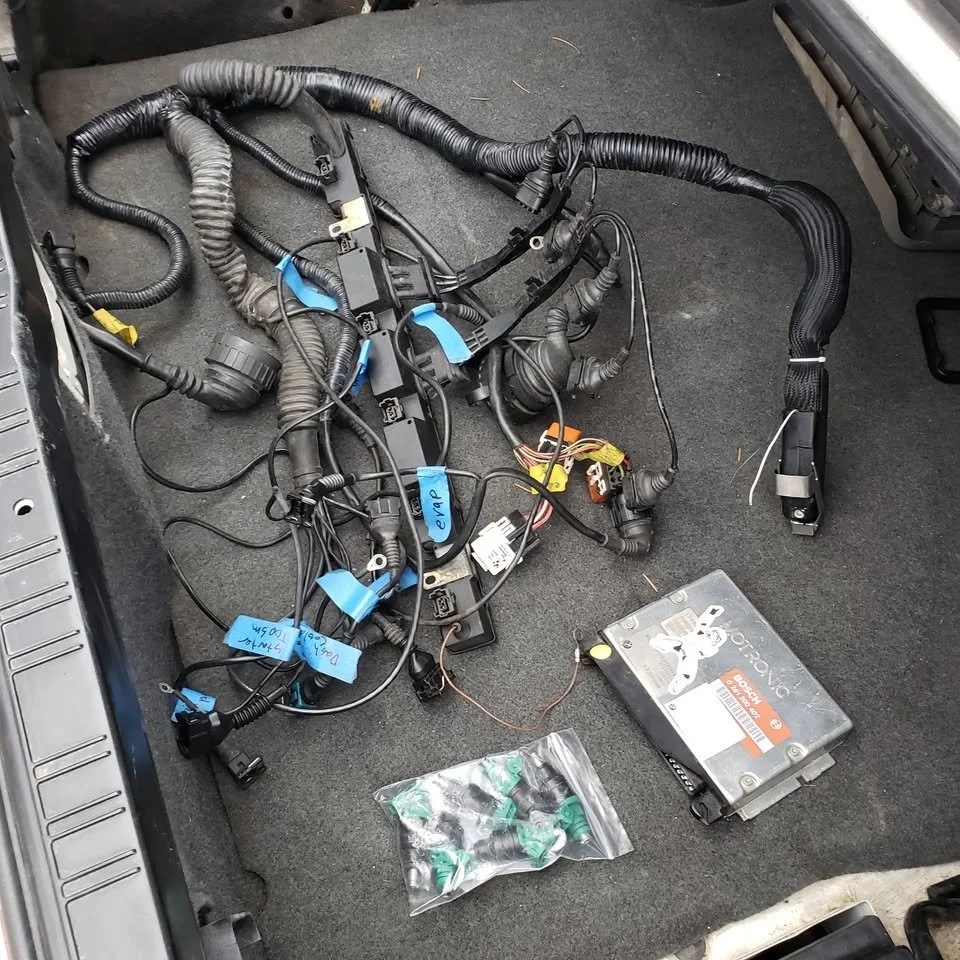
For the sake of keeping this entry short and sweet, I won’t go too deep into the full swap. I could probably write a novel about the trials and tribulations on this one.
I’ll add short captions to the following photos to give a little context instead.
I should also mention, this was one of the first projects where I tacked all of my own metal work. It’s not the prettiest, but the goal was to make the car drive… not build a SEMA show car.
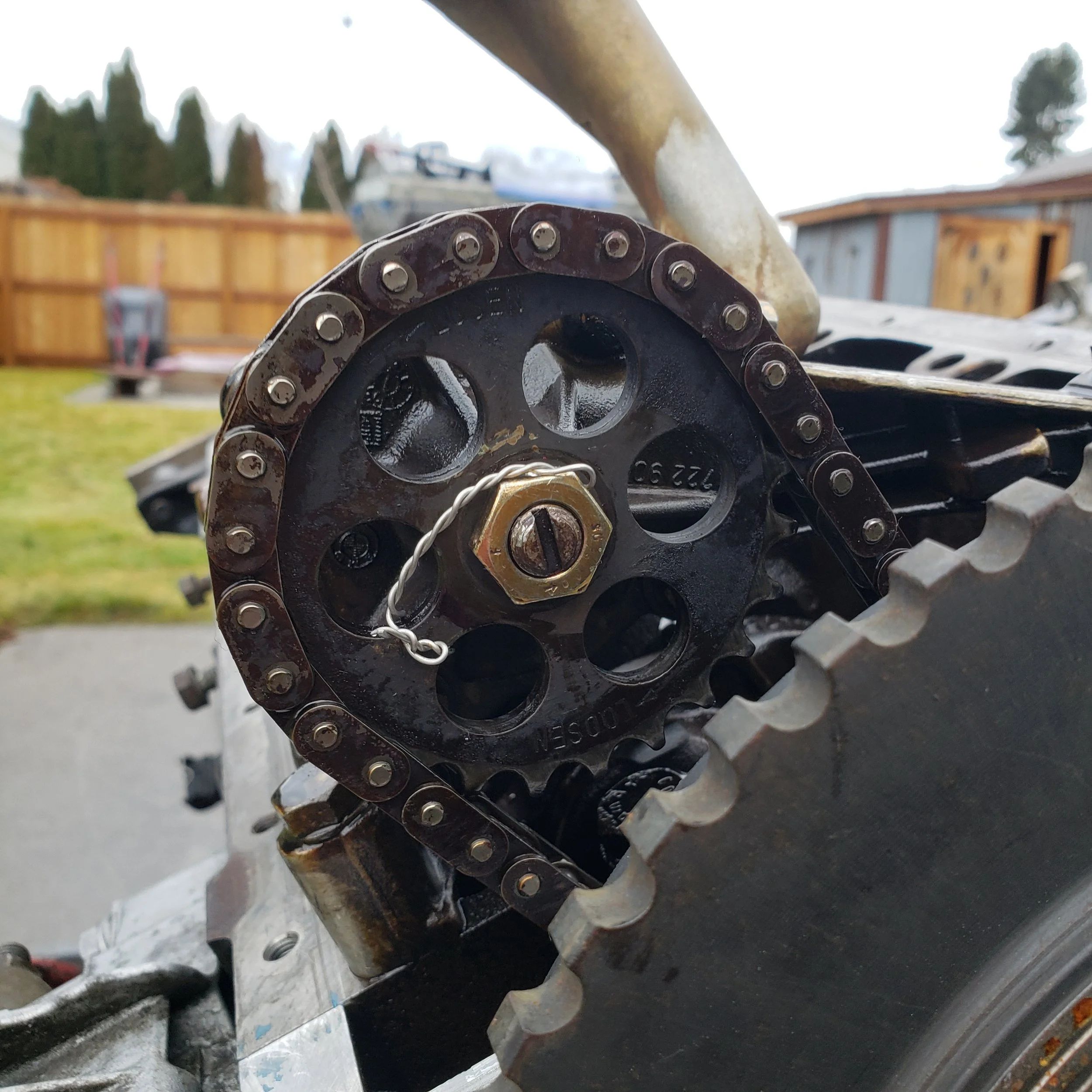
With the oil pan off, I went ahead and secured the oil pump sprocket nut to make sure it wouldn’t back off and cause issues down the road.
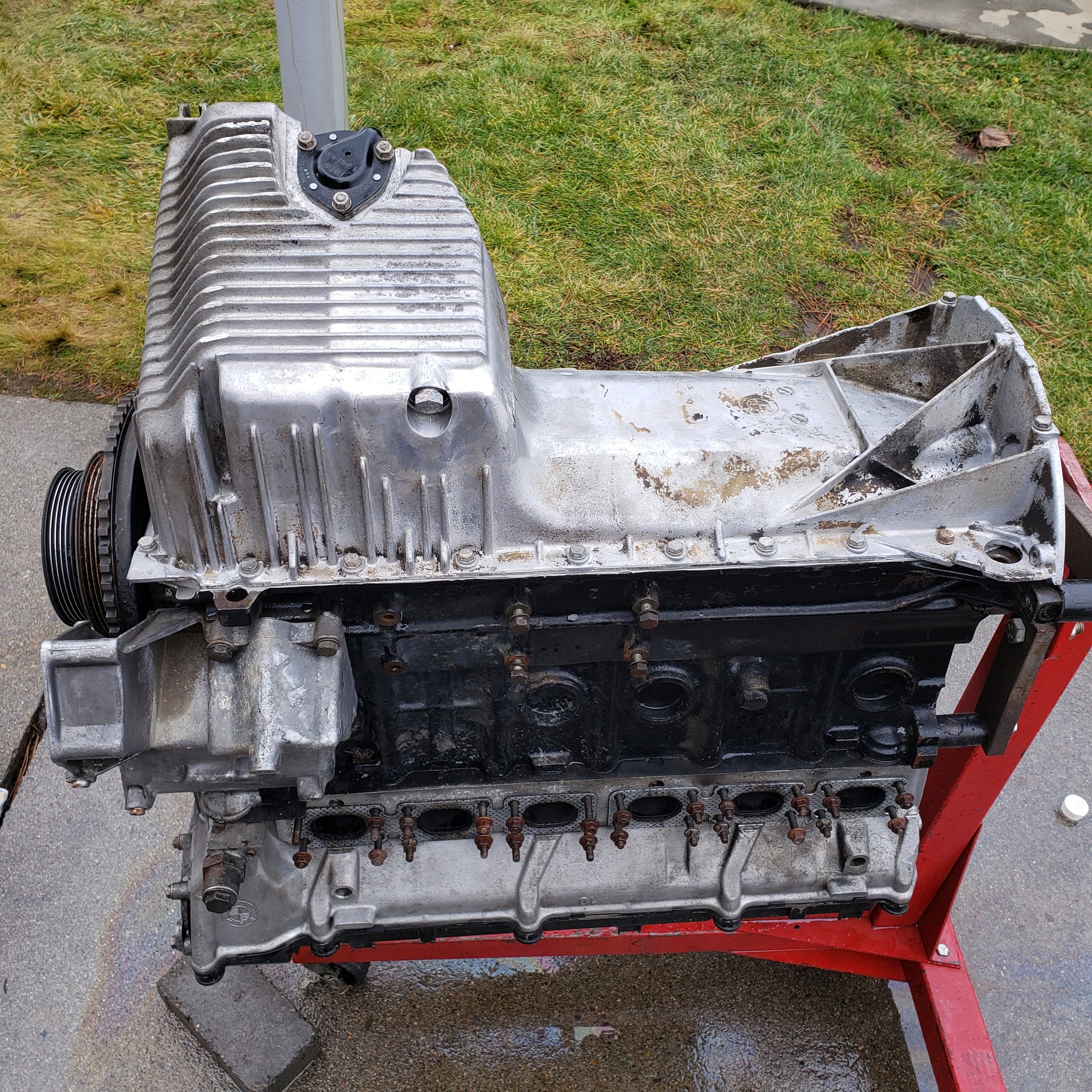
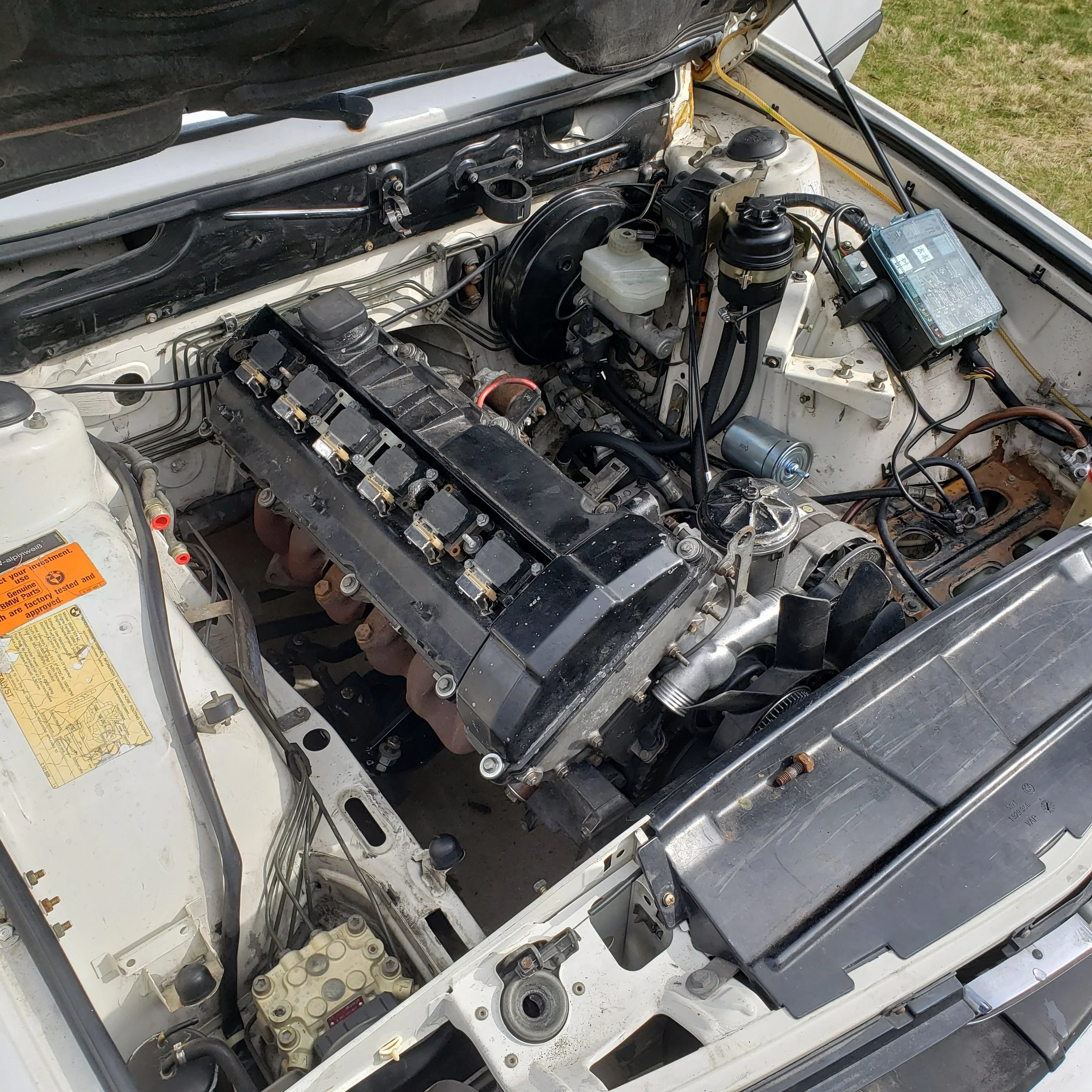
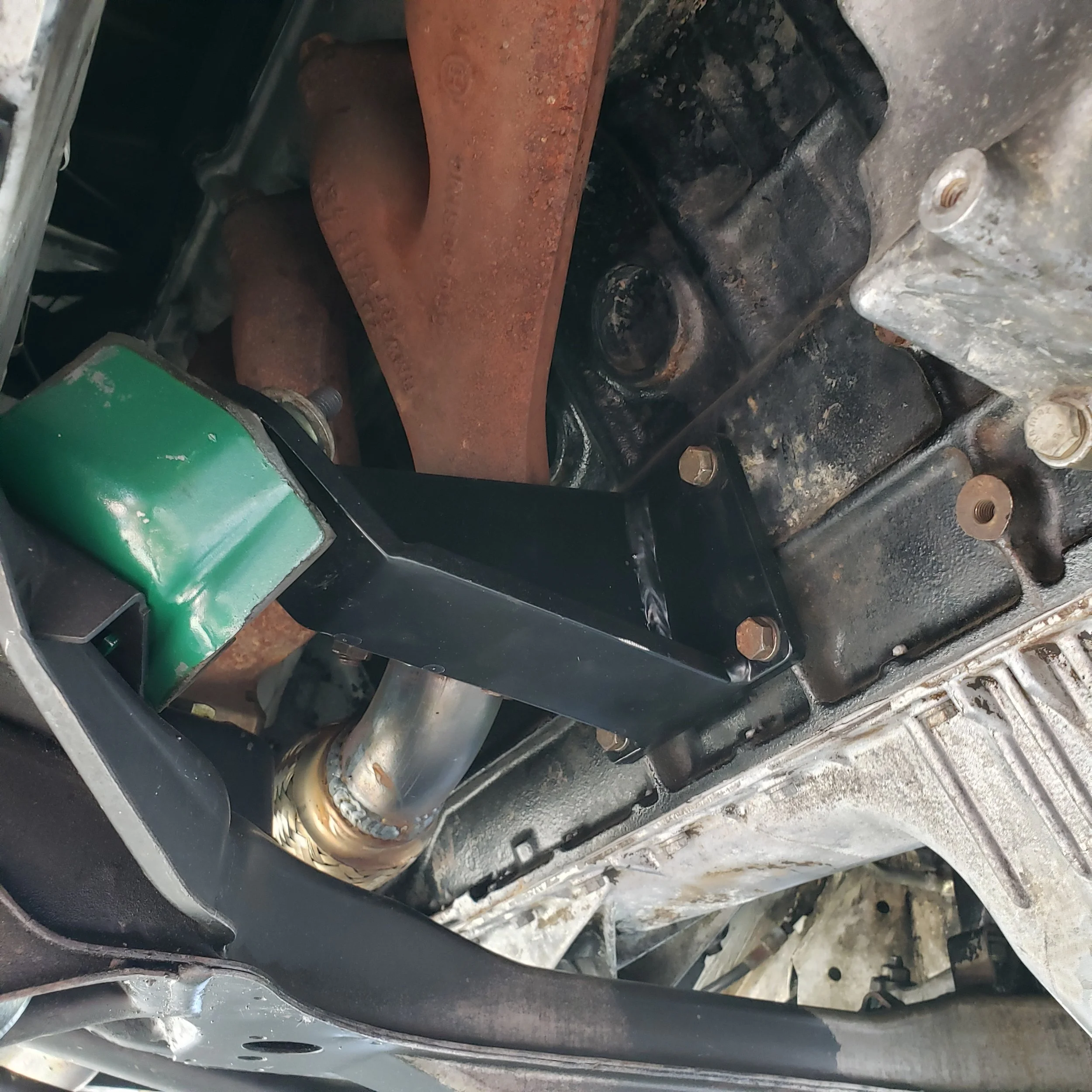
Unfortunately, I didn’t take any photos of the engine arms as a set before I stalled them. I ordered them from overseas, and they ran about $250. At the time, I felt it was worth spending the money since I wasn’t very well-versed in fabrication yet.
They worked great with the stock M30 mounts, and the engine sat in the chassis very nicely.
I did have to notch the sway bar slightly where one of the oil pan bolts was making contact. No big deal.
I ran E34 M50 headers and installed a brand-new brake booster along with a good used master cylinder and reservoir.
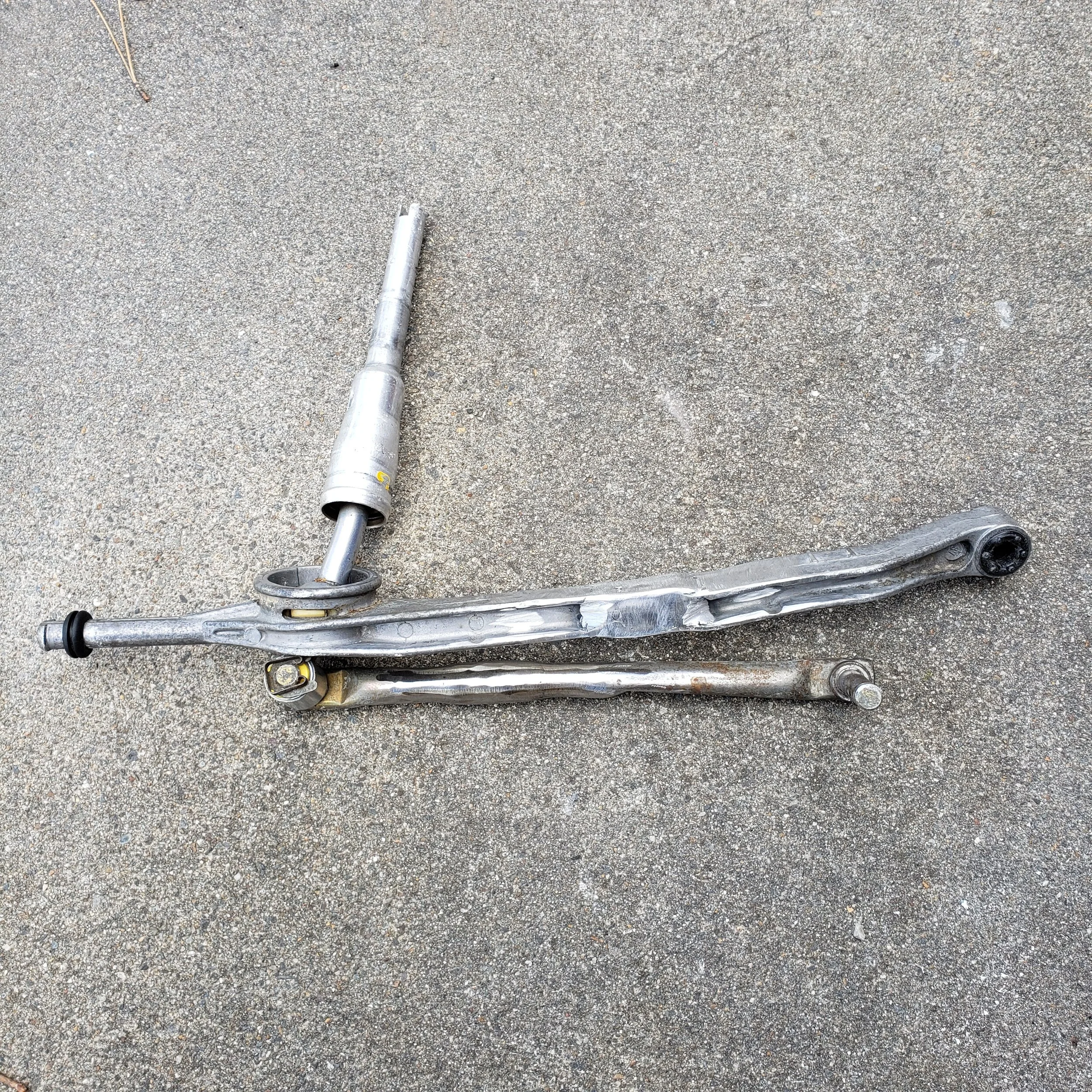
This part was pretty cool because it forced me to buy a spool gun and pick up a tank of argon shielding gas so I could MIG weld aluminum.
I also had to lengthen the shift linkage and add the infamous 10-degree twist when running a Getrag 260 behind an M50.
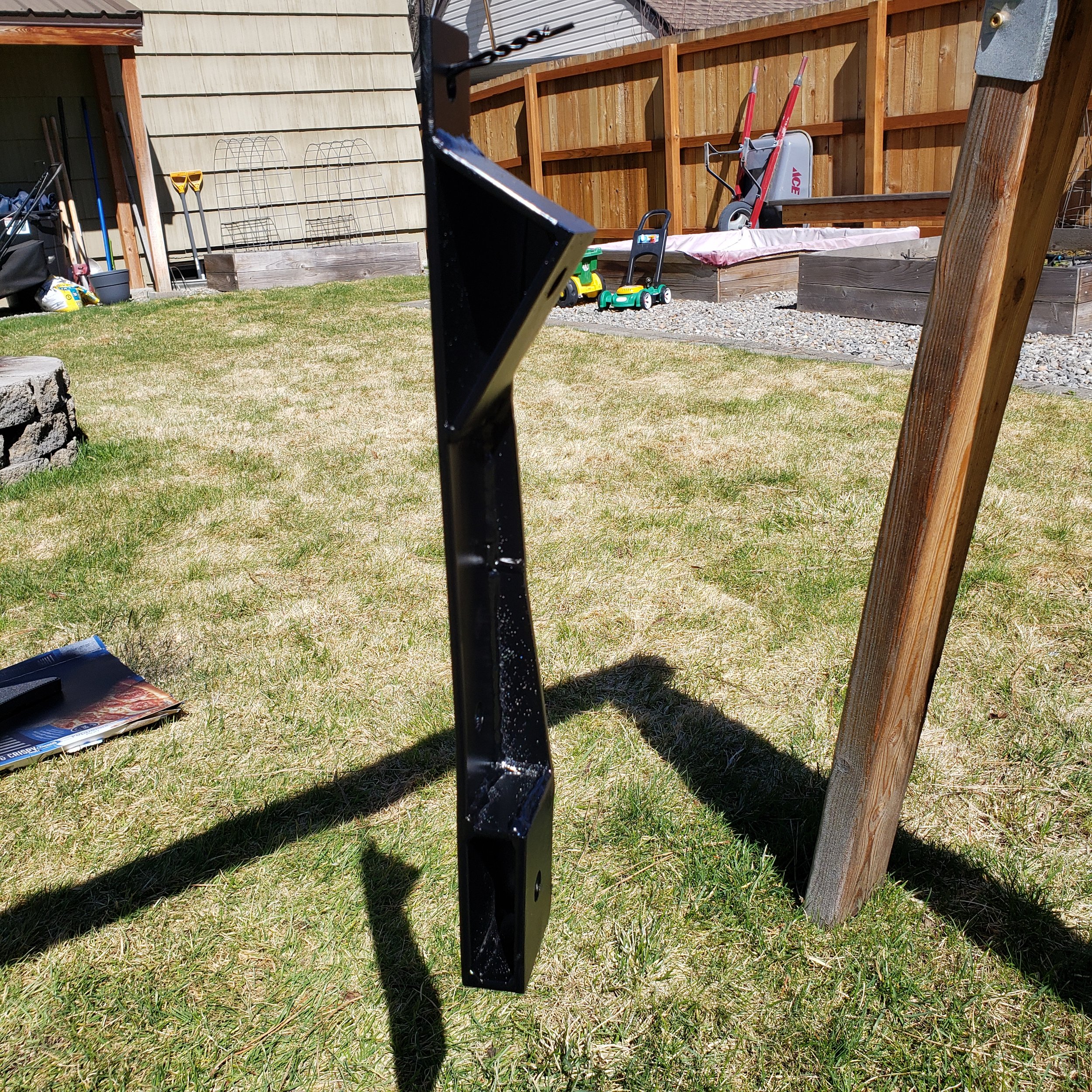
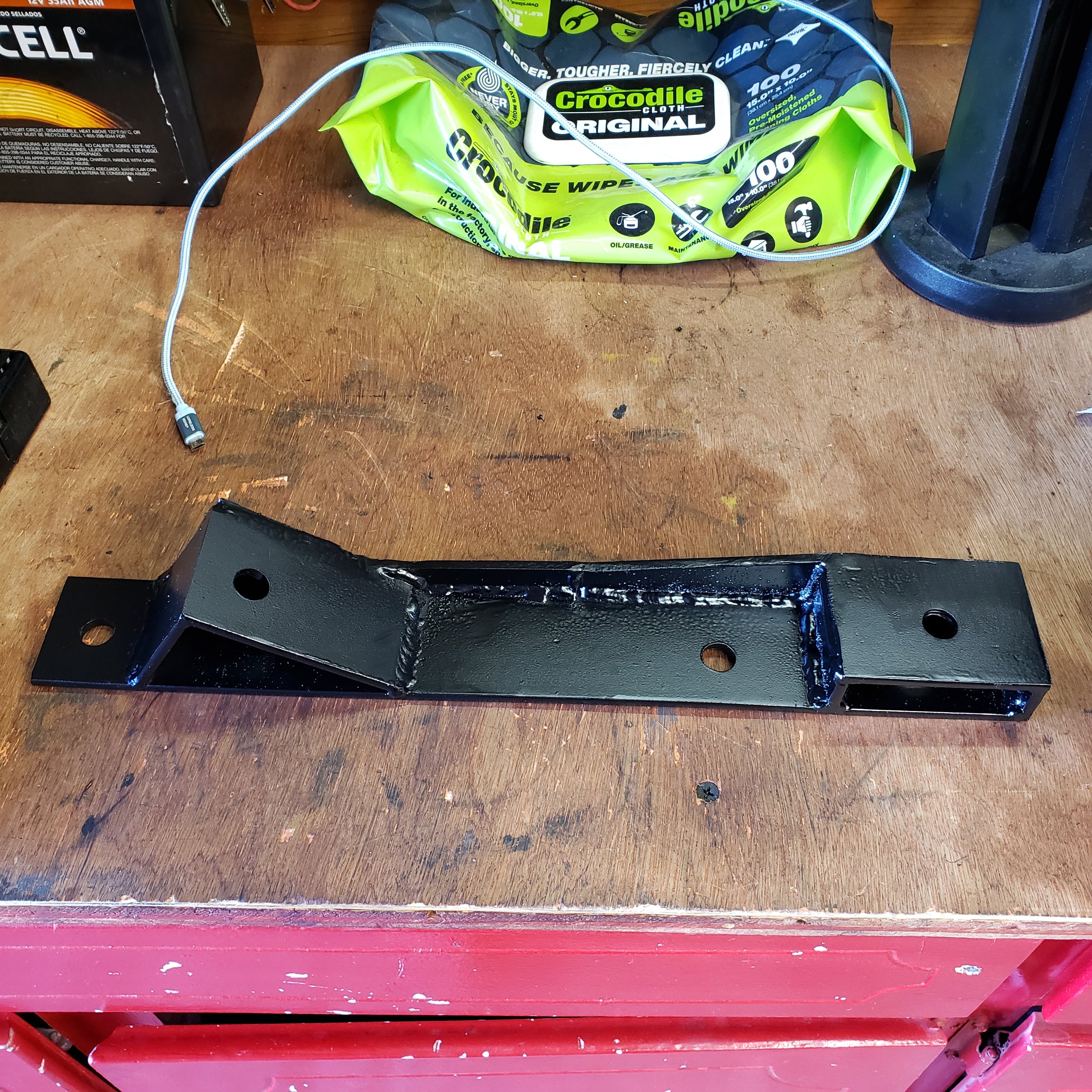
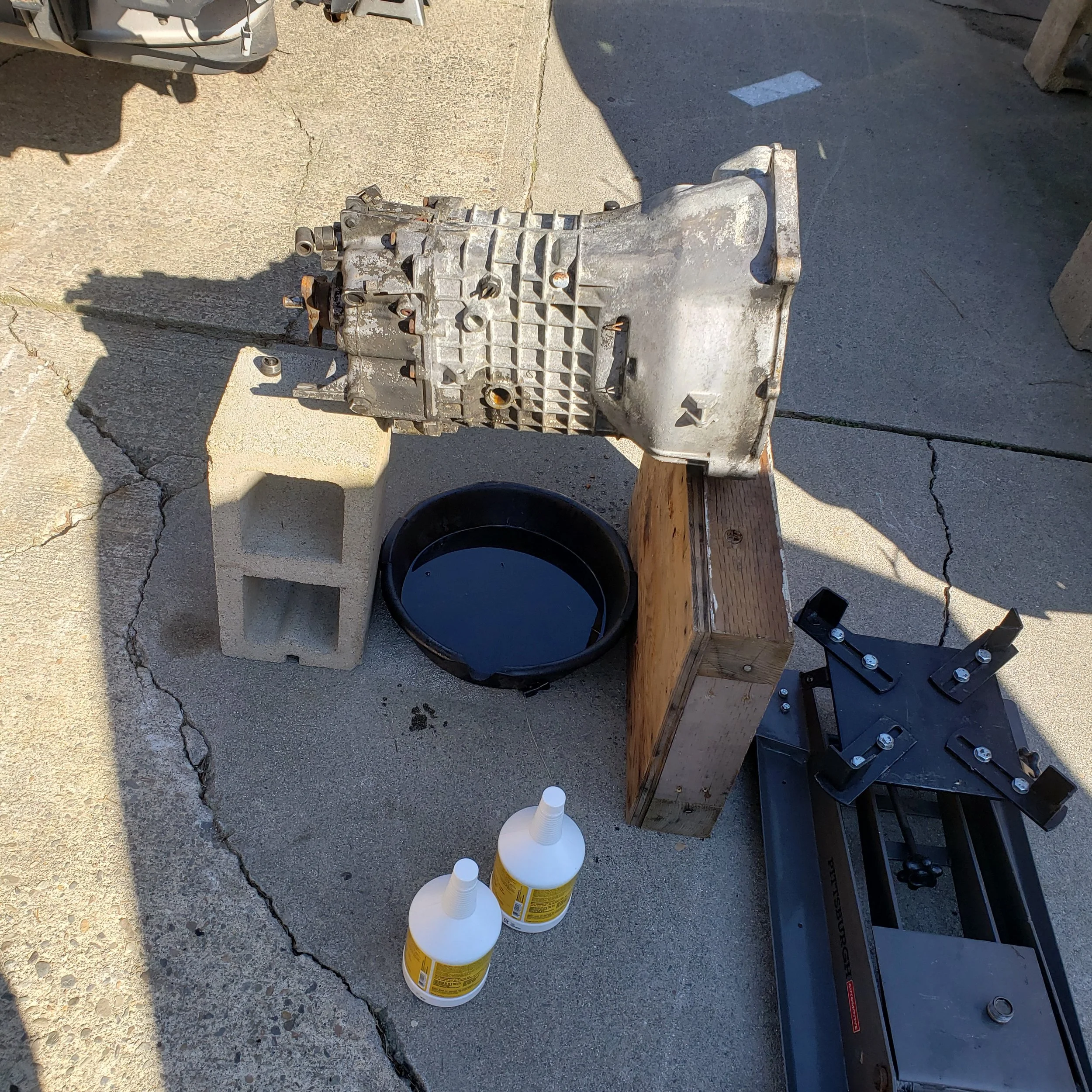
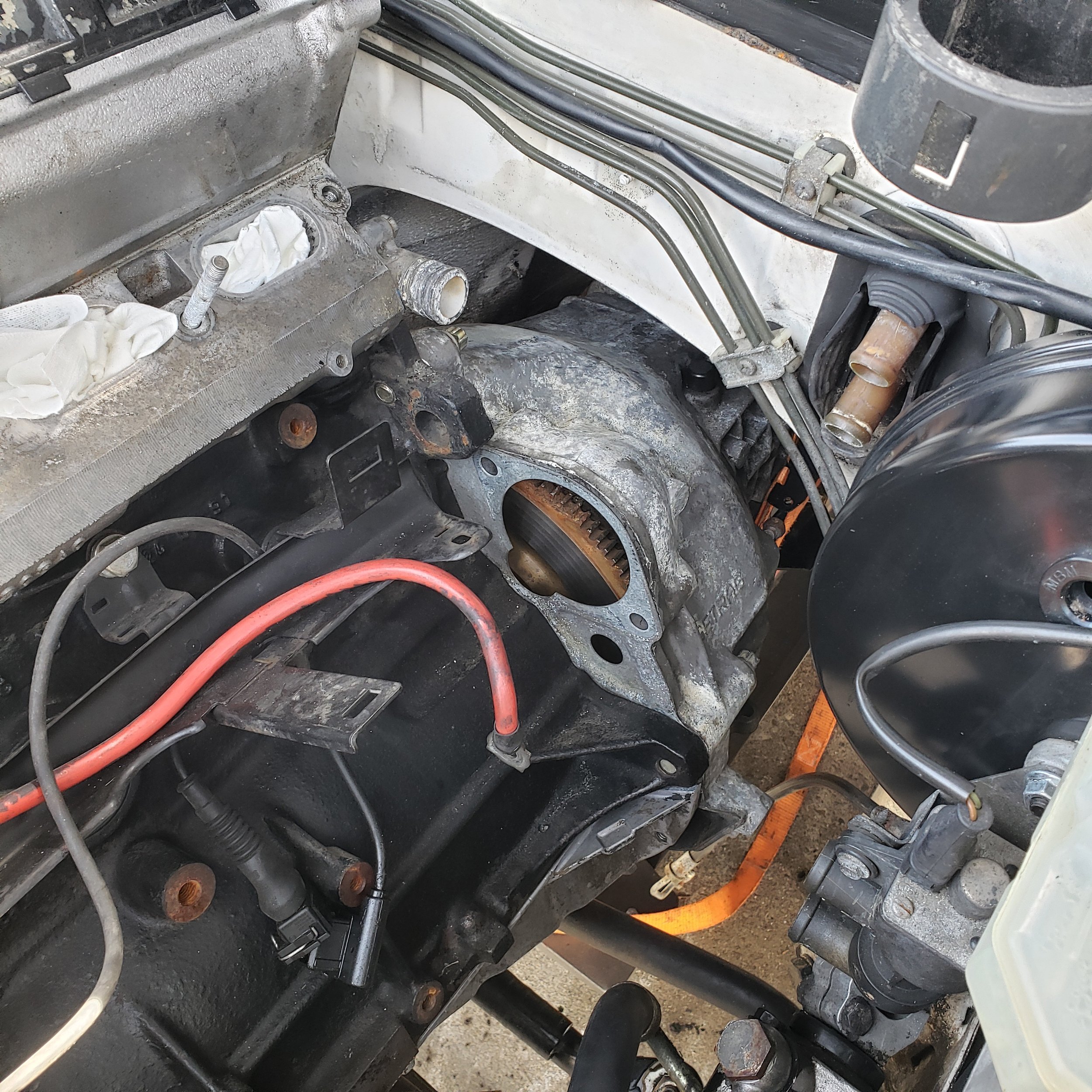
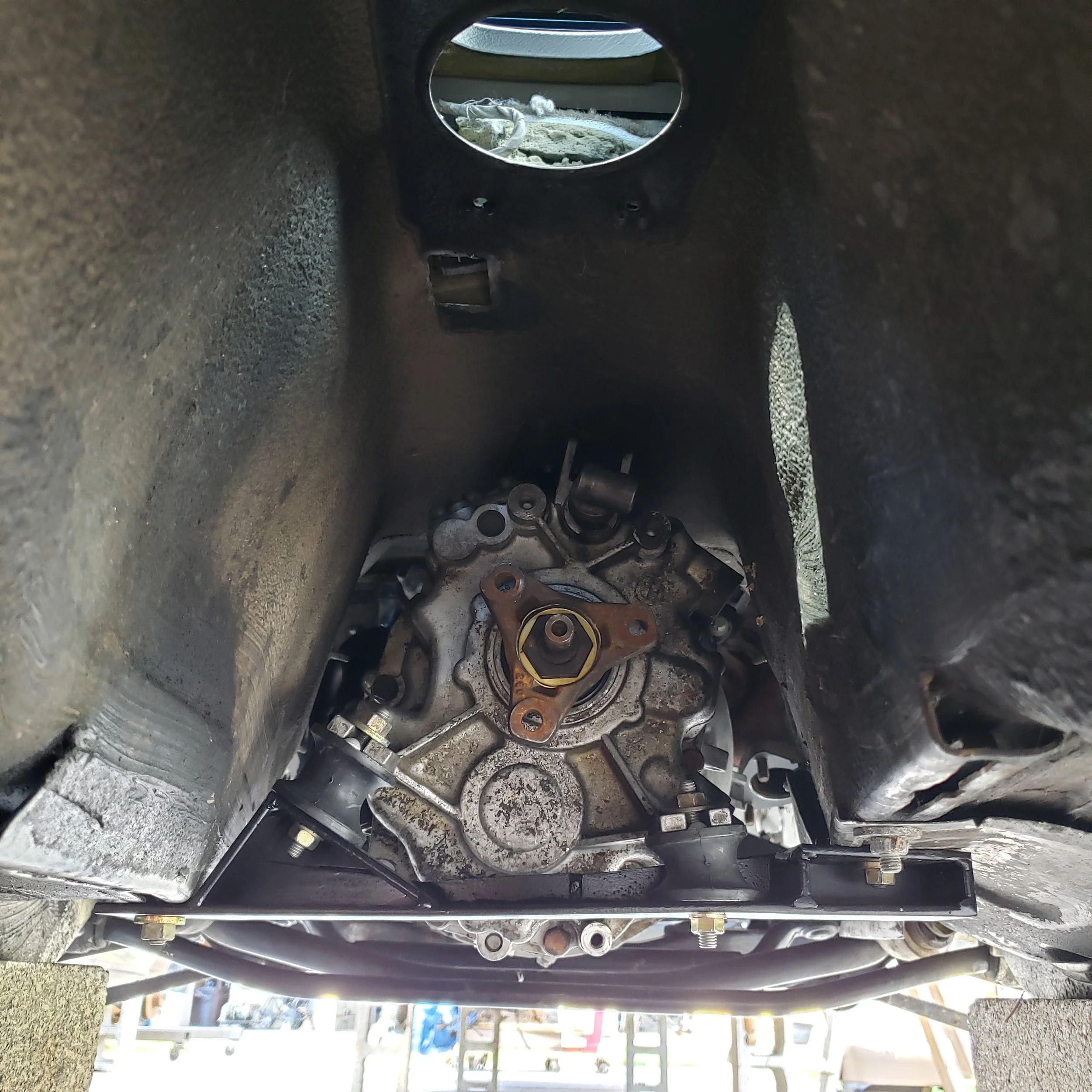
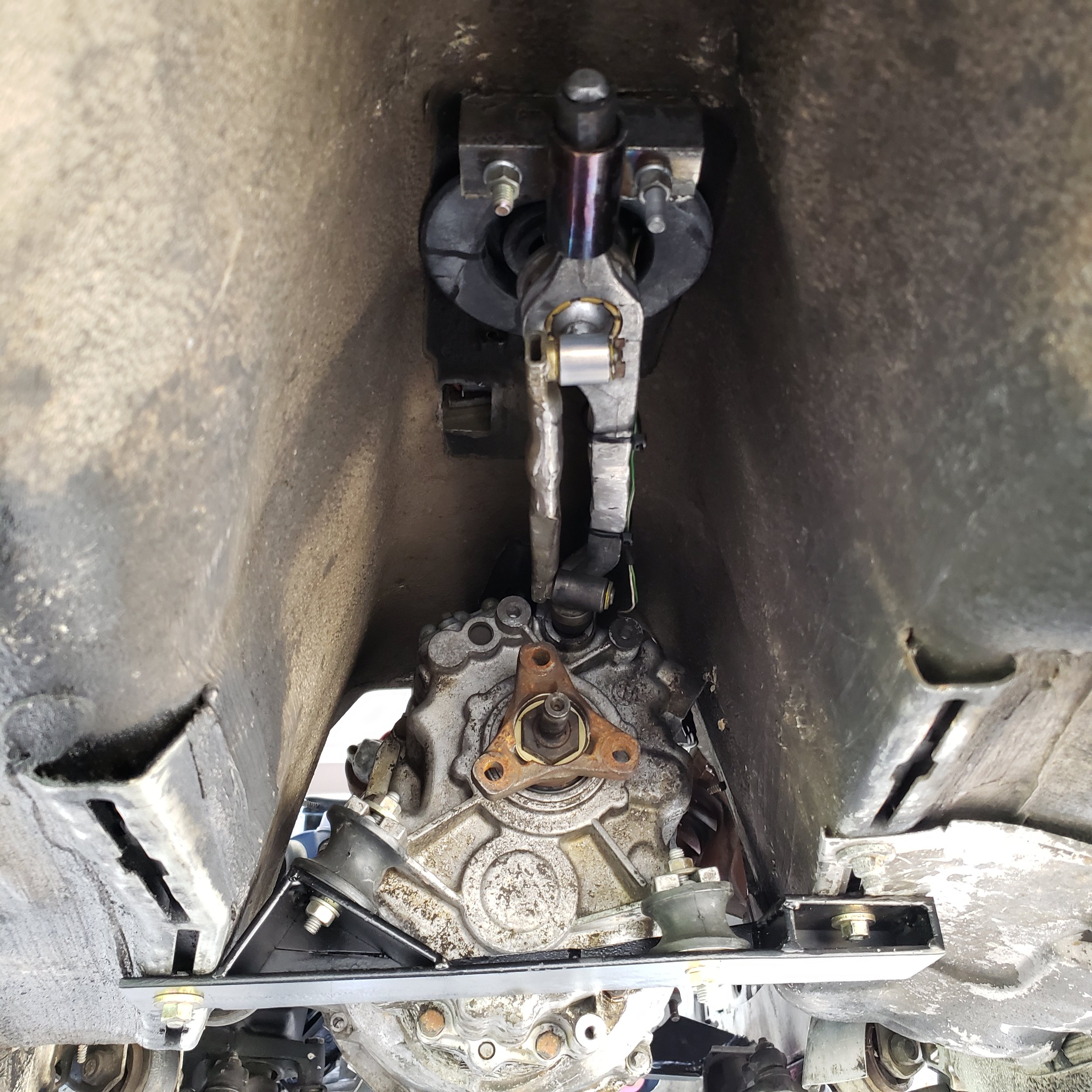
With fresh fluid in the transmission and a crossmember I crafted and painted, it was ready to go in.
When running a G260 from an M20 car, you need to use the M20 starter, flywheel, and clutch setup.
The flywheel also needs to be machined down to properly mate with the M50. There’s plenty of information out there on this process, so I won’t go into the fine details here.
I also installed new transmission mounts while I was at it.
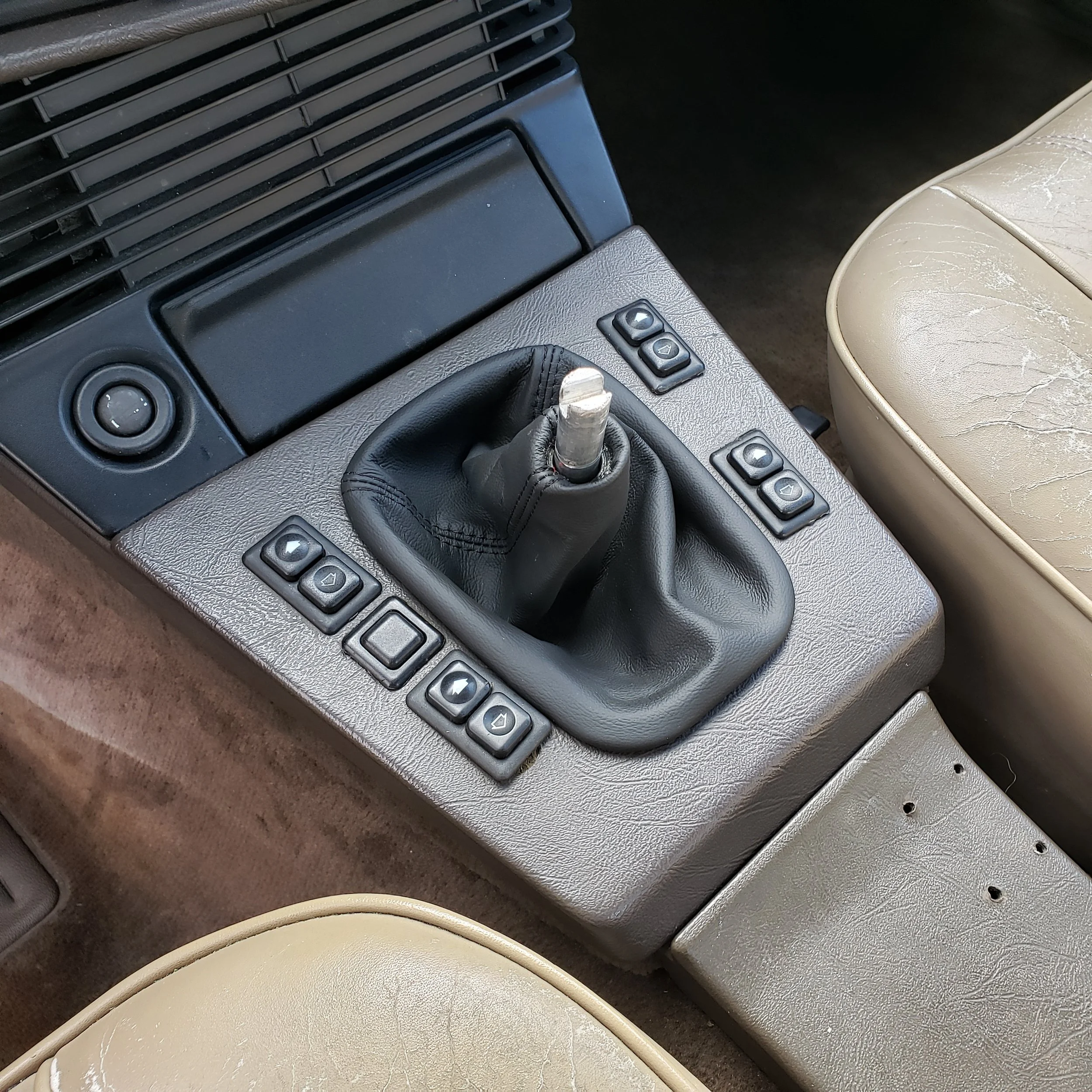
For the shift linkage, I went with a simple tube-style mount and bolted a block straight through the body to position it at the height I needed.
I even imported a brand-new shift boot from Germany.
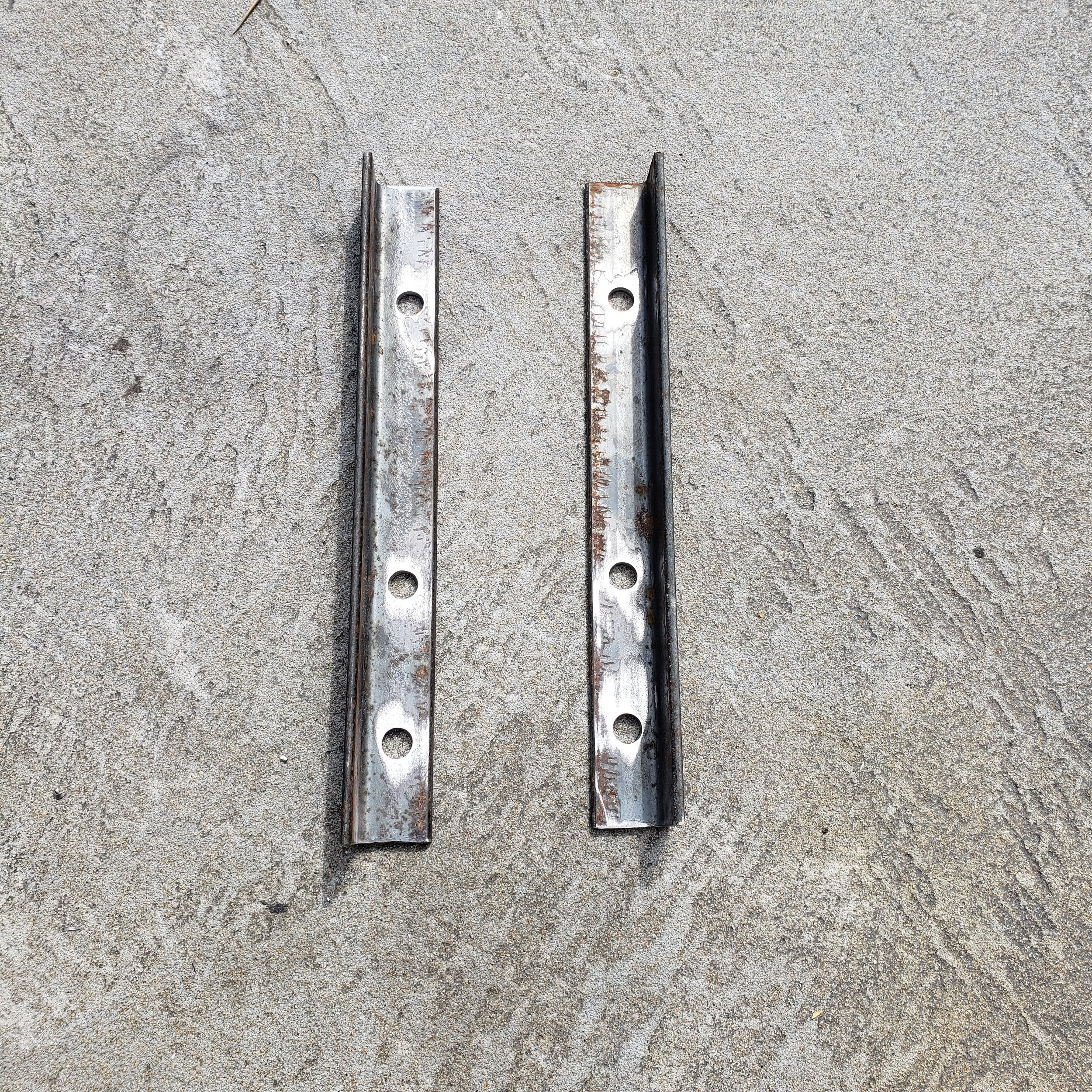
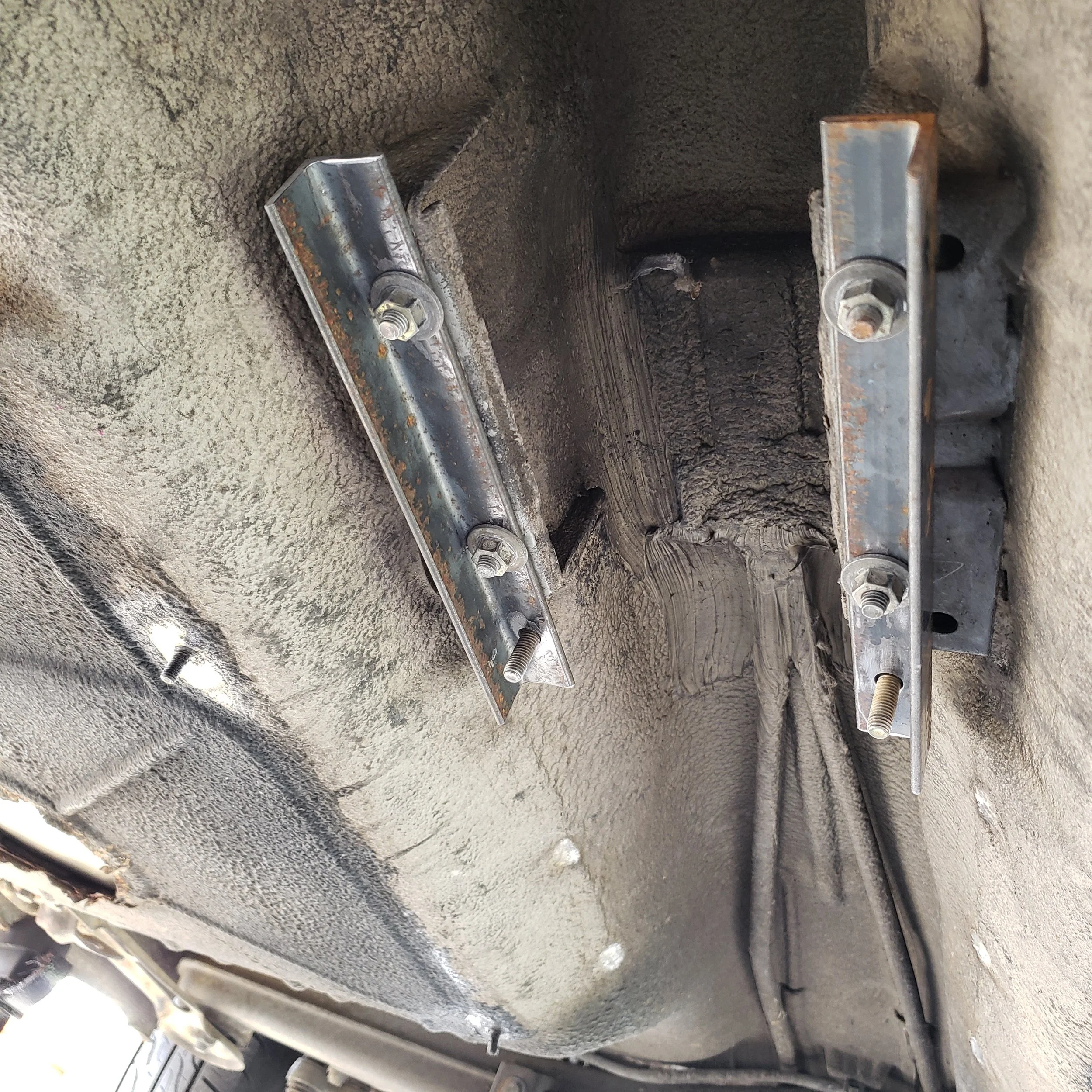
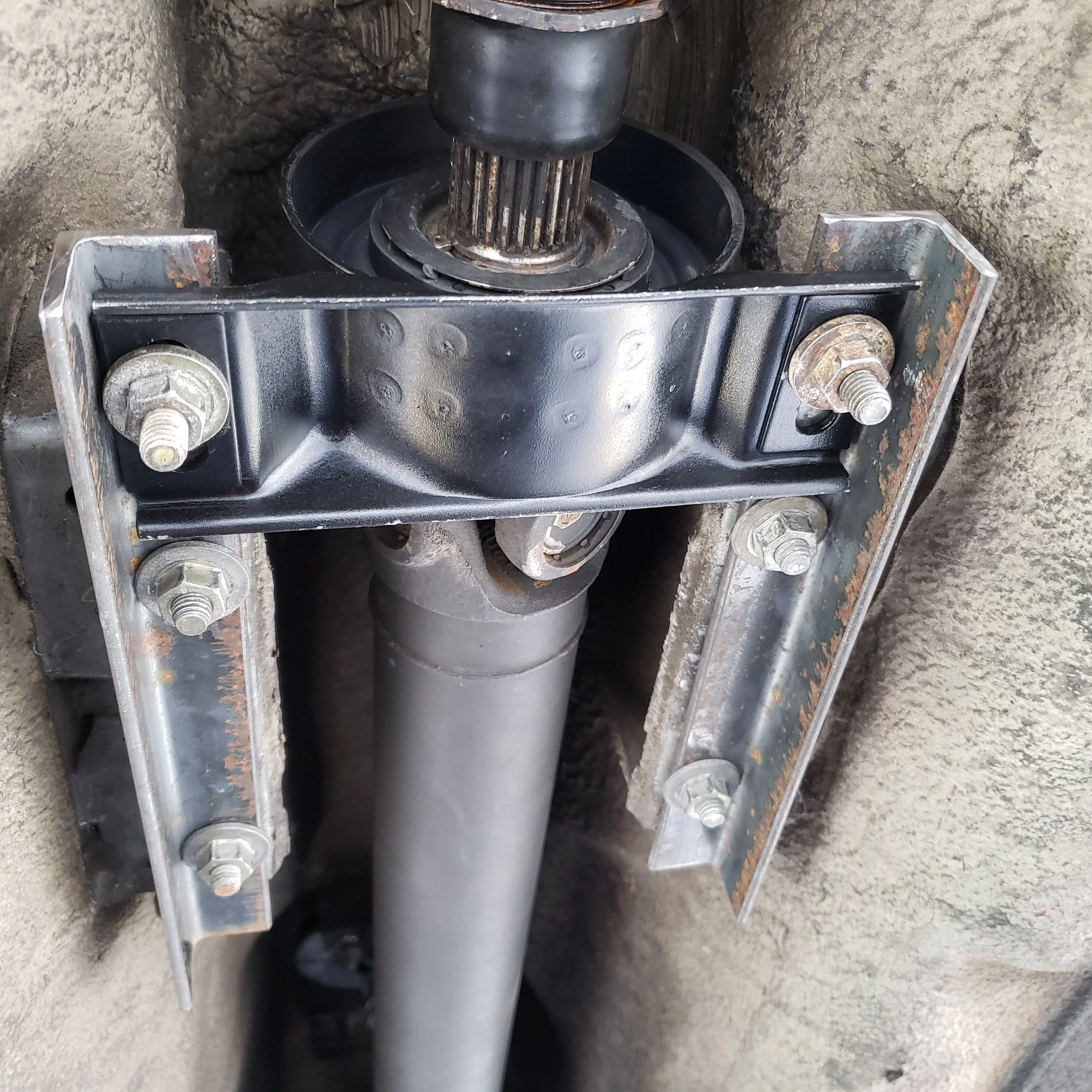
This was the method I used to extend the carrier bearing mounting points to where they needed to be to properly secure the driveshaft.
As for why I didn’t paint them… I don’t really have a good answer. At the time, making the car drive was more important than the finer details.
(And to be clear, the buyer was fully aware of the rust and understood the car was built to drive, not a full restoration.)
But yes, in hindsight, I absolutely should have painted them.
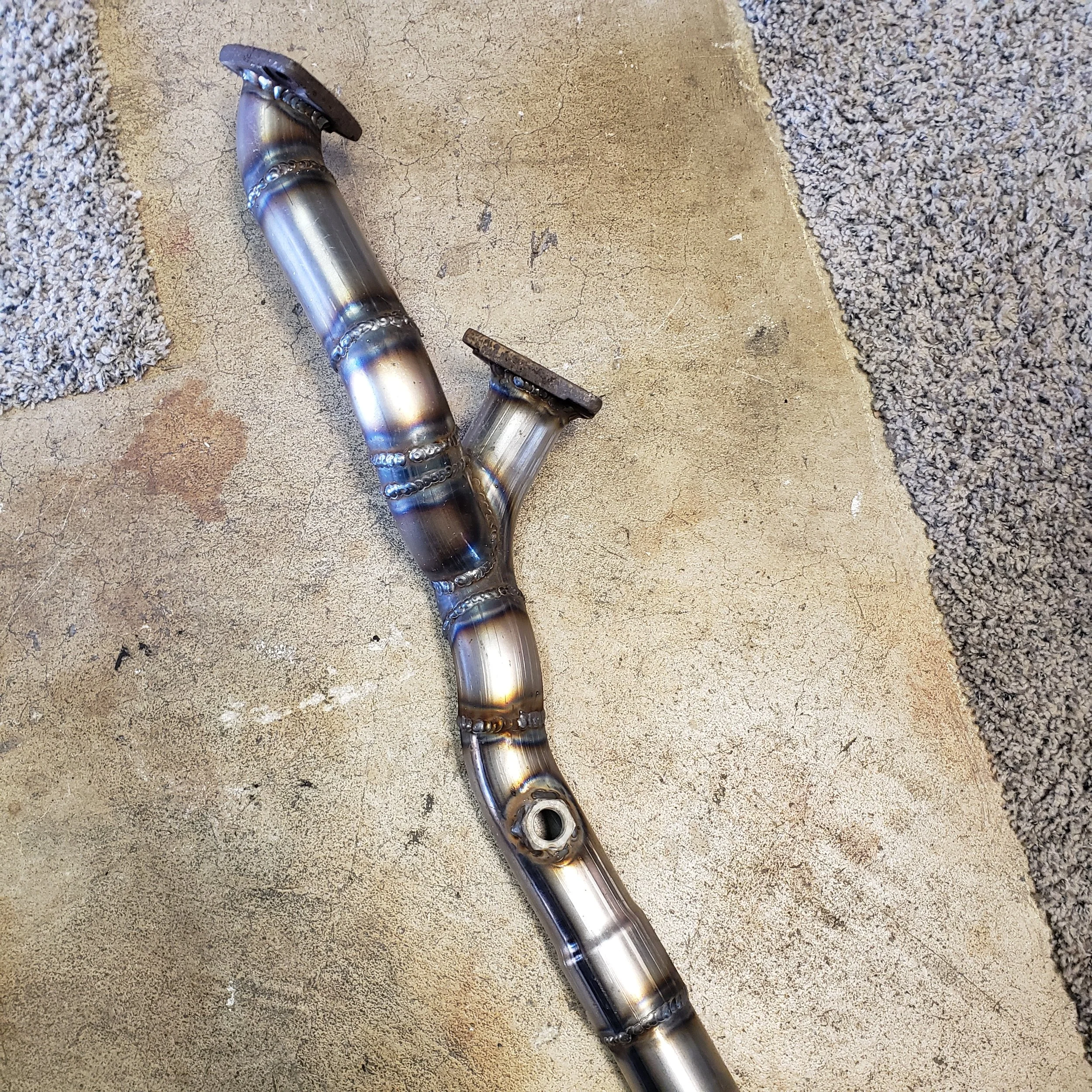
Here are the downpipes I welded up.
The rest of the exhaust was nothing fancy, just straight pipe running back to a budget muffler I picked up on eBay. At least it was all brand new.
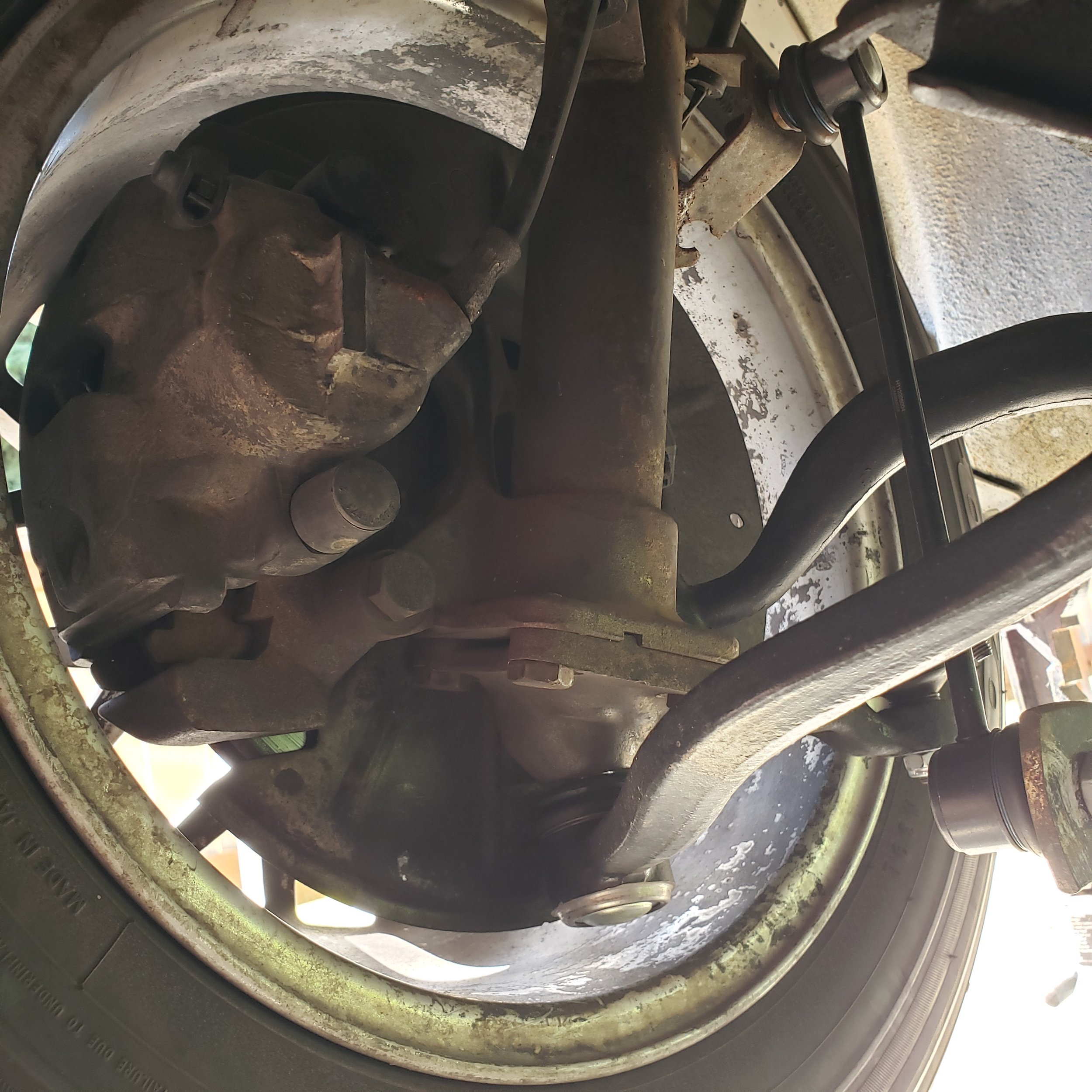
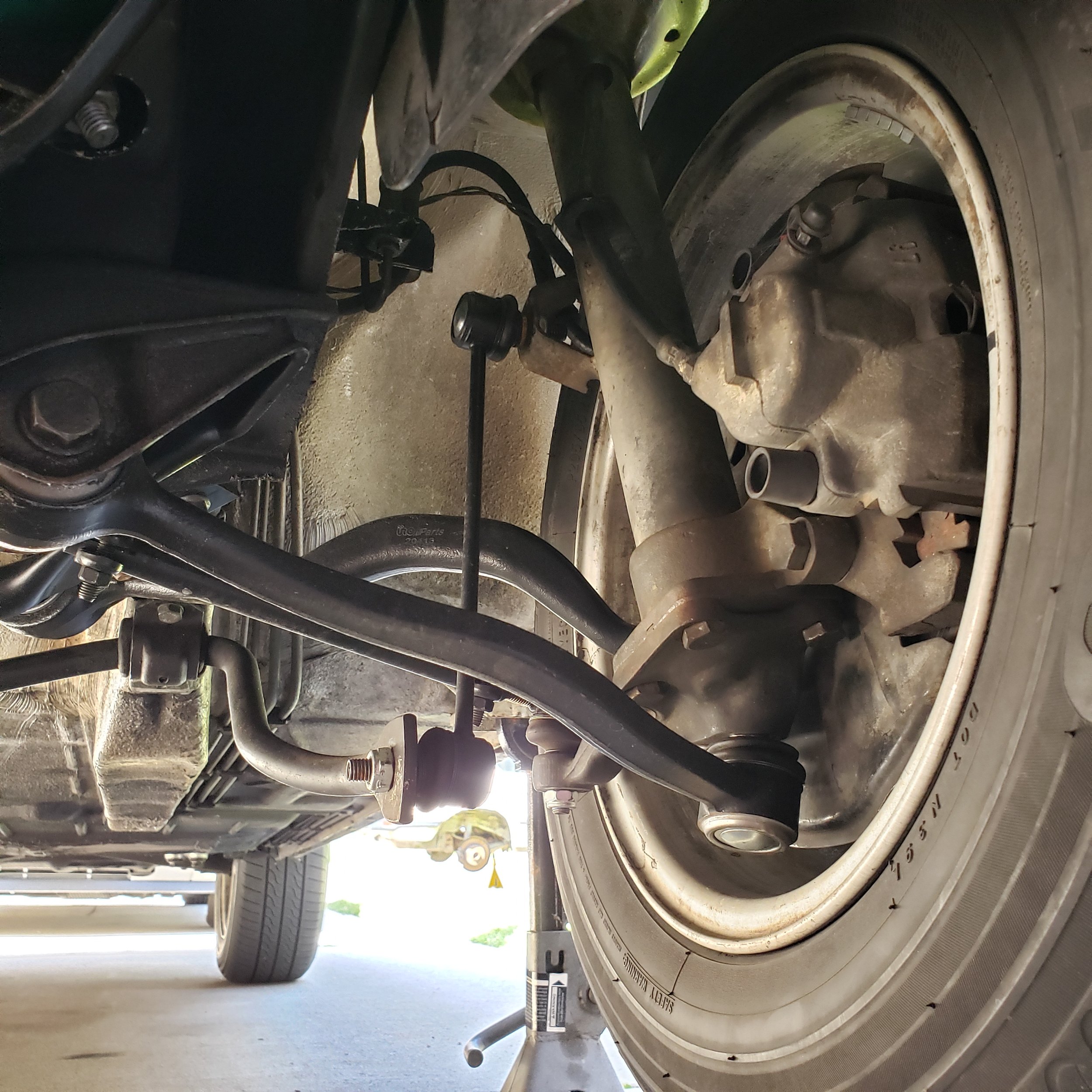
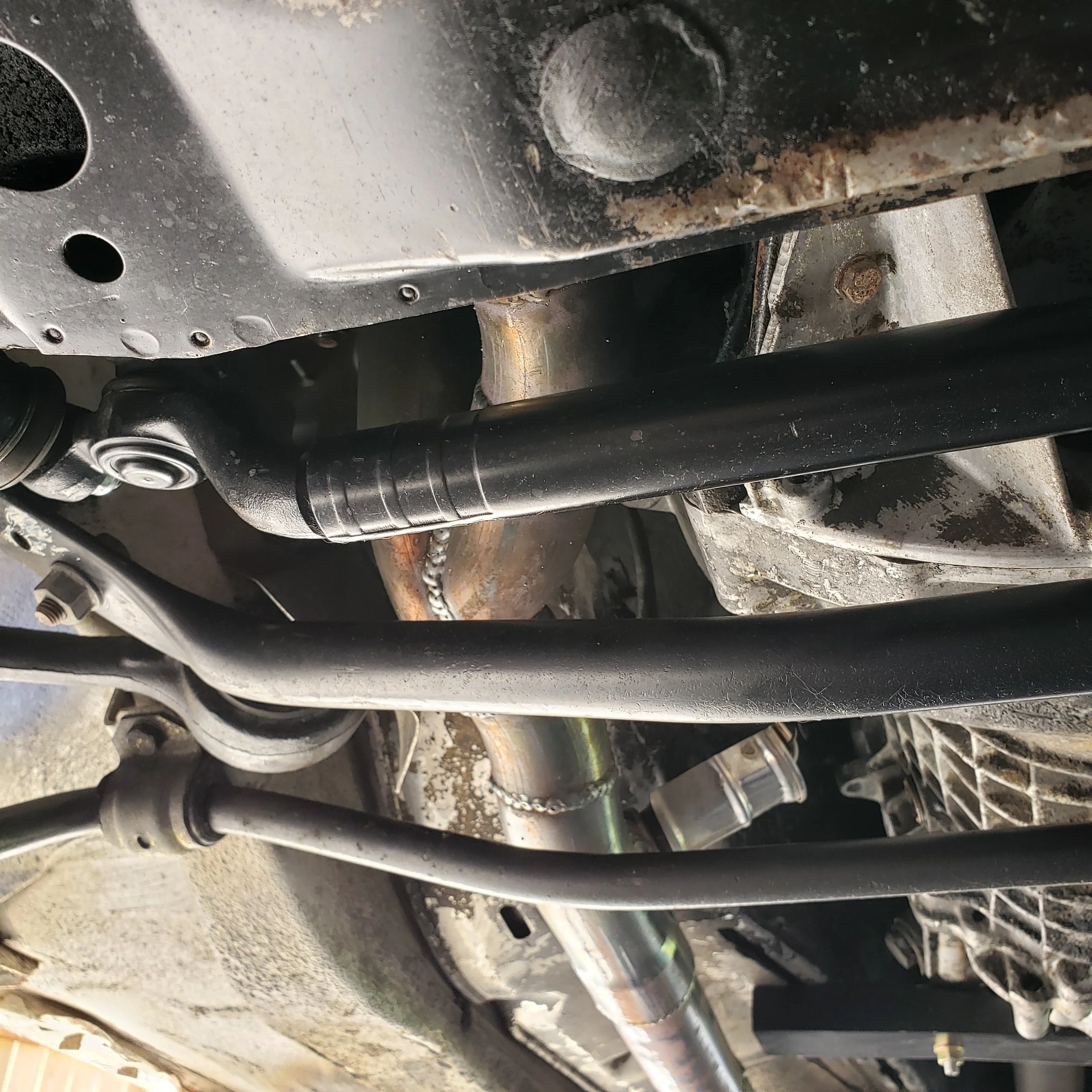
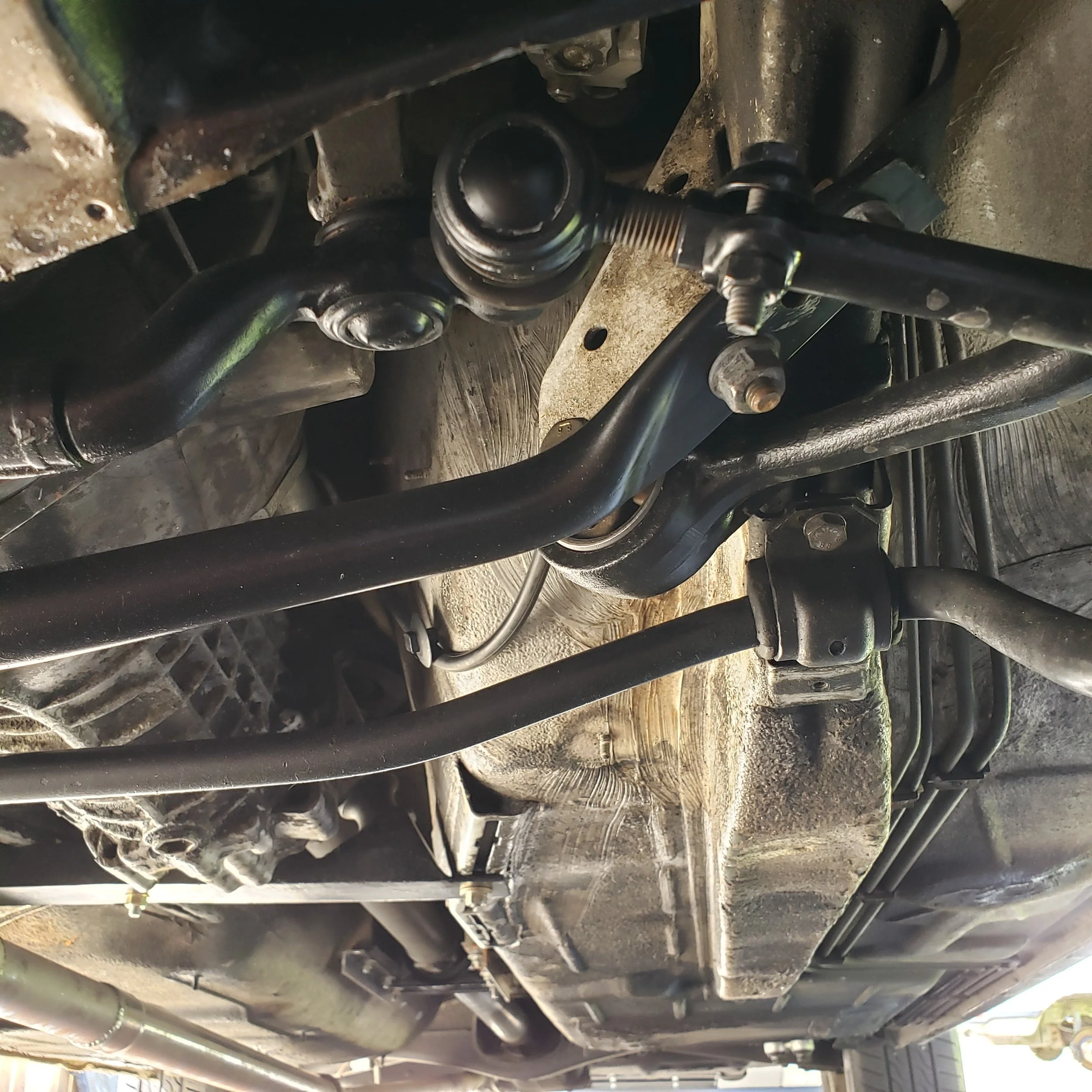
I installed a complete front-end suspension kit. Lord knows any BMW of this age needs it.
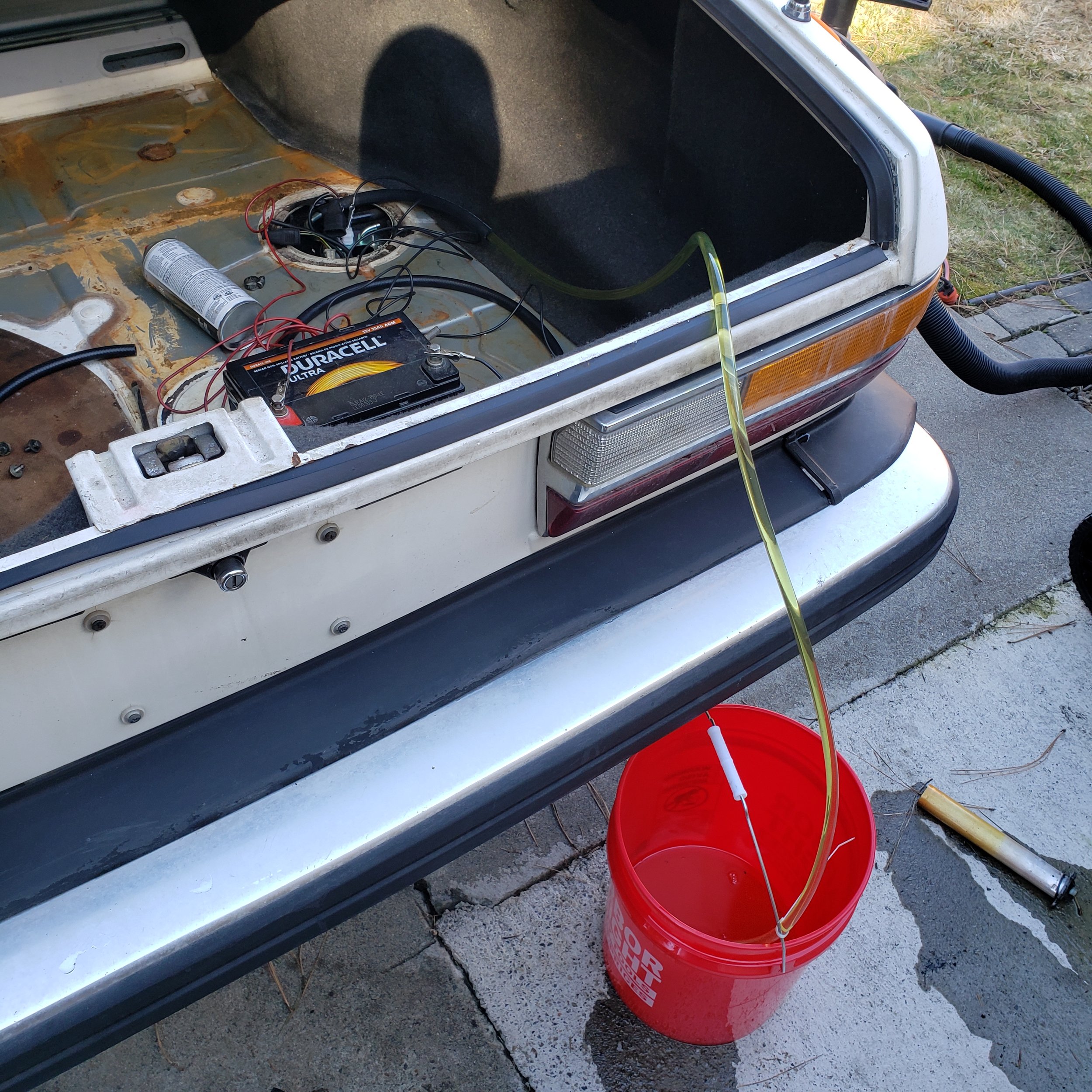
Converting the car from diesel to gas was actually pretty simple. I supplied 12V to the in-tank pump to purge all the old diesel out of the system.
After that, I installed new standard gasoline fuel pumps. One in-tank and one inline.
Easy and done.
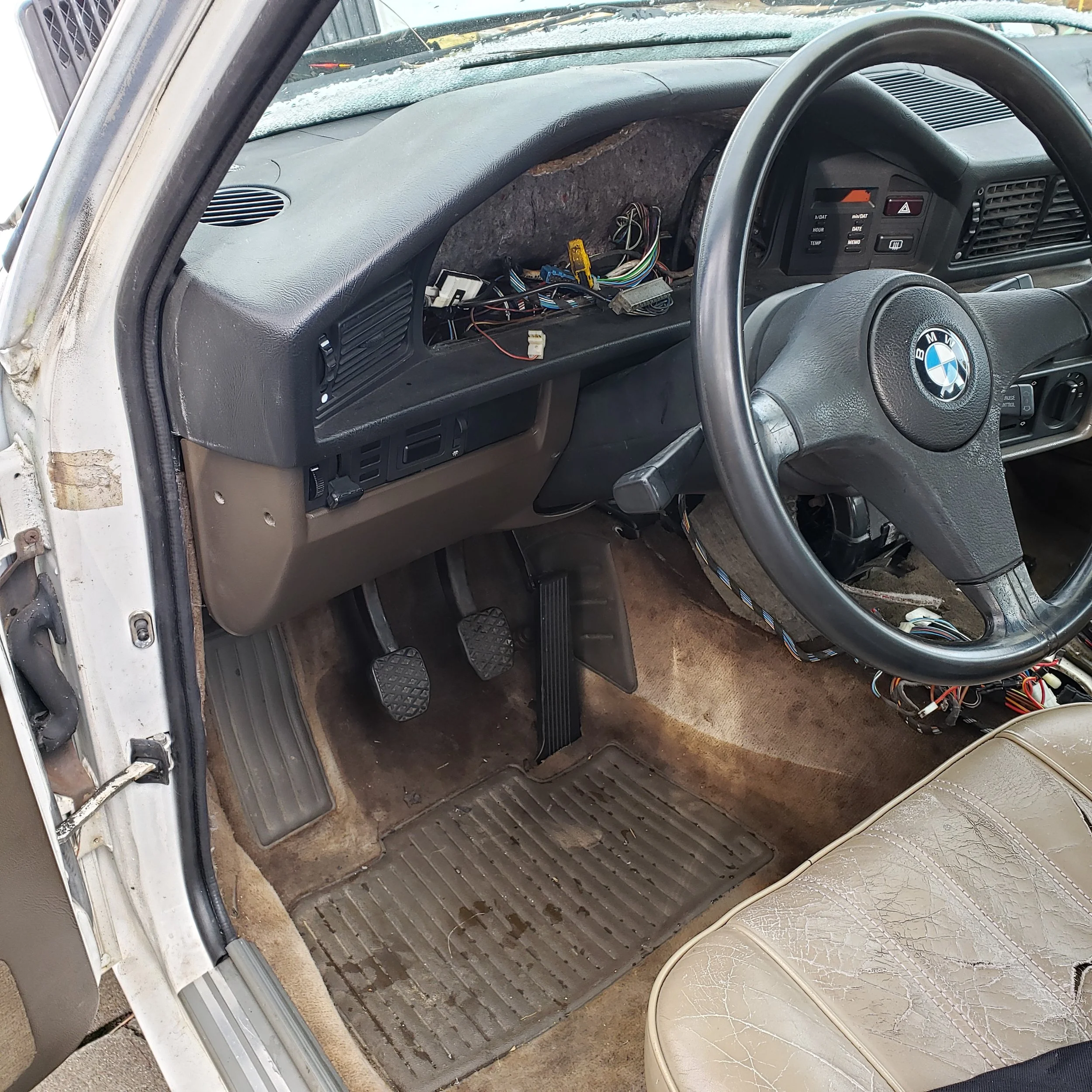
I also had to 5-speed swap the car.
Once again, I got lucky, the E28 uses a very similar pedal setup to the E30 chassis, which I happened to have on hand.
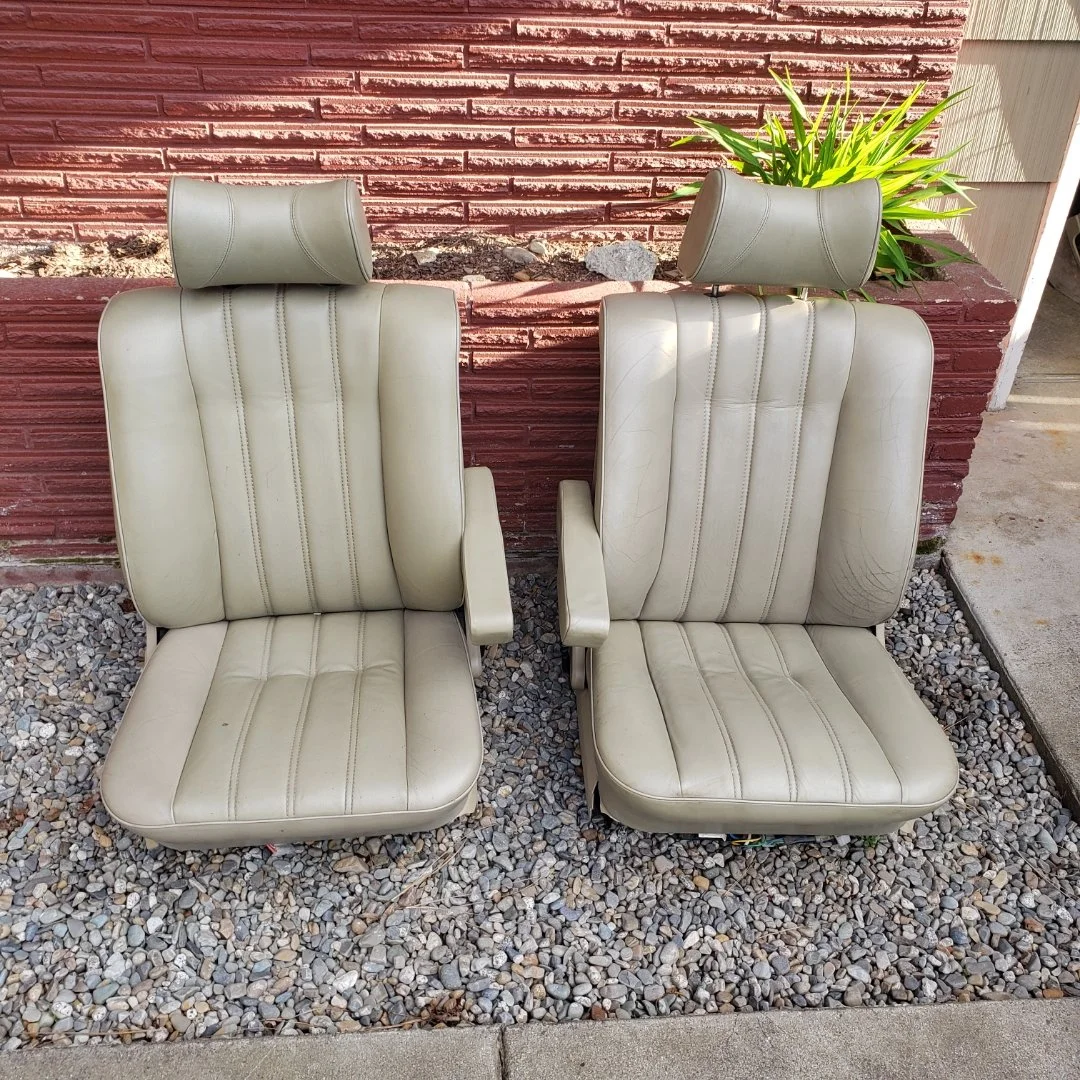
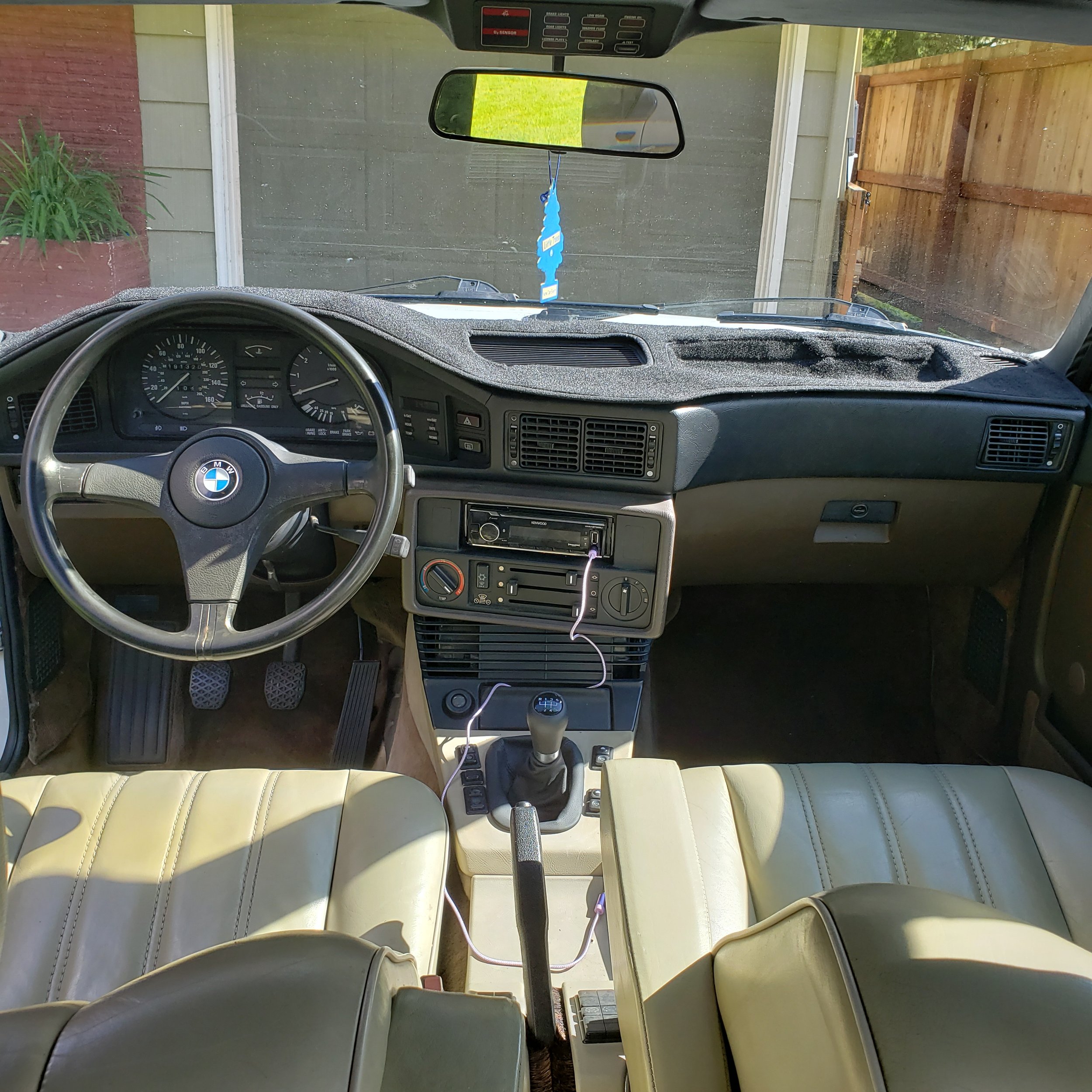
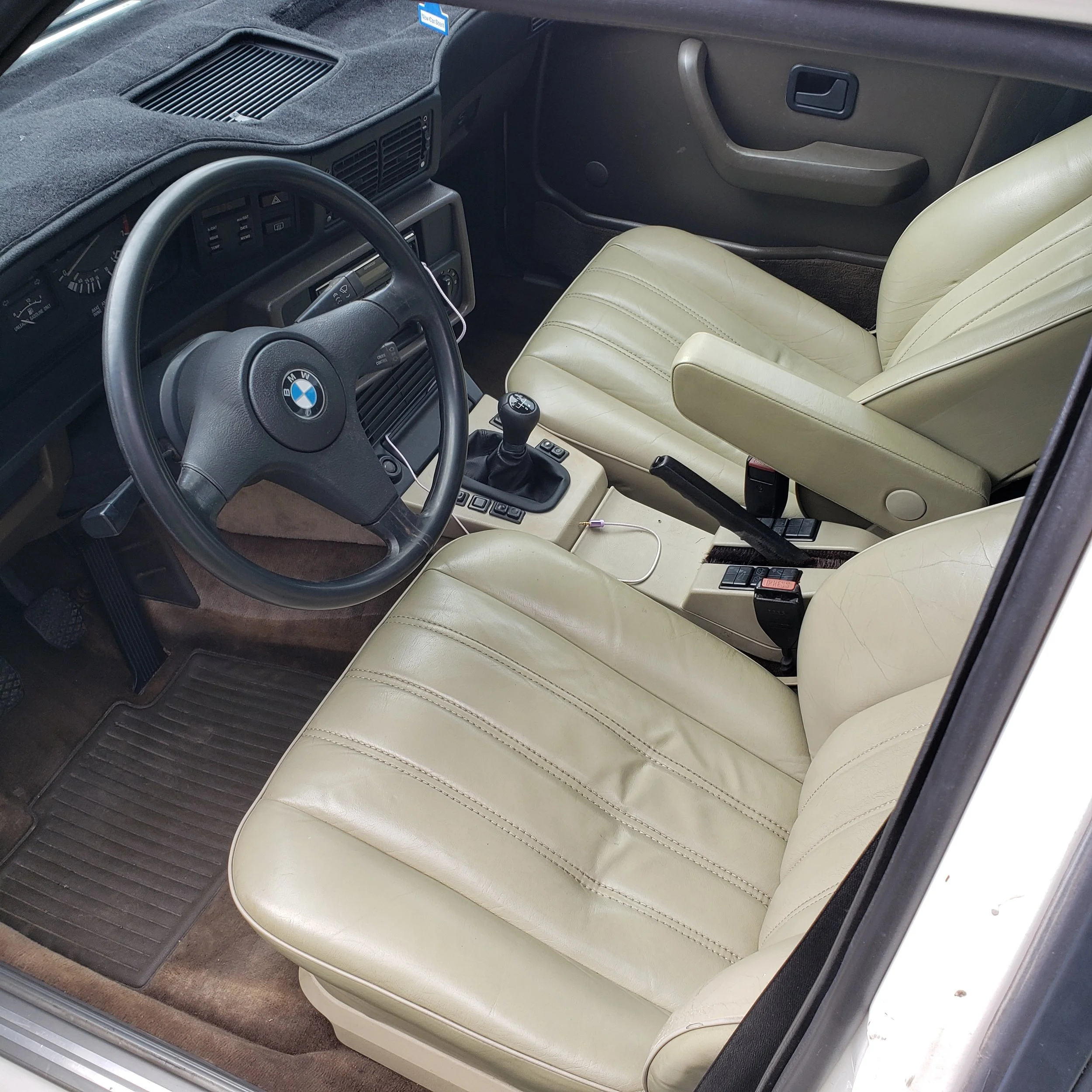
For the interior, I installed a beautiful set of electric seats I tracked down in Tacoma, Washington. I paid $400 for the pair, which I thought was a killer deal.
I made a day out of it and also picked up some center console pieces with the seat switches I needed in the Seattle area.
The car was equipped with power seats from the factory, so all I had to do was locate the wiring harnesses under the carpet and plug them in.
And to my surprise, every single motor and switch worked.
What a blessing.
I also installed a dash mat to cover the cracks in the dashboard, because, well… E28
For audio, I installed a budget Kenwood deck with an aux input, along with some speakers, you guessed it… that I also had laying around.
Nothing special, but it sounded more than okay.
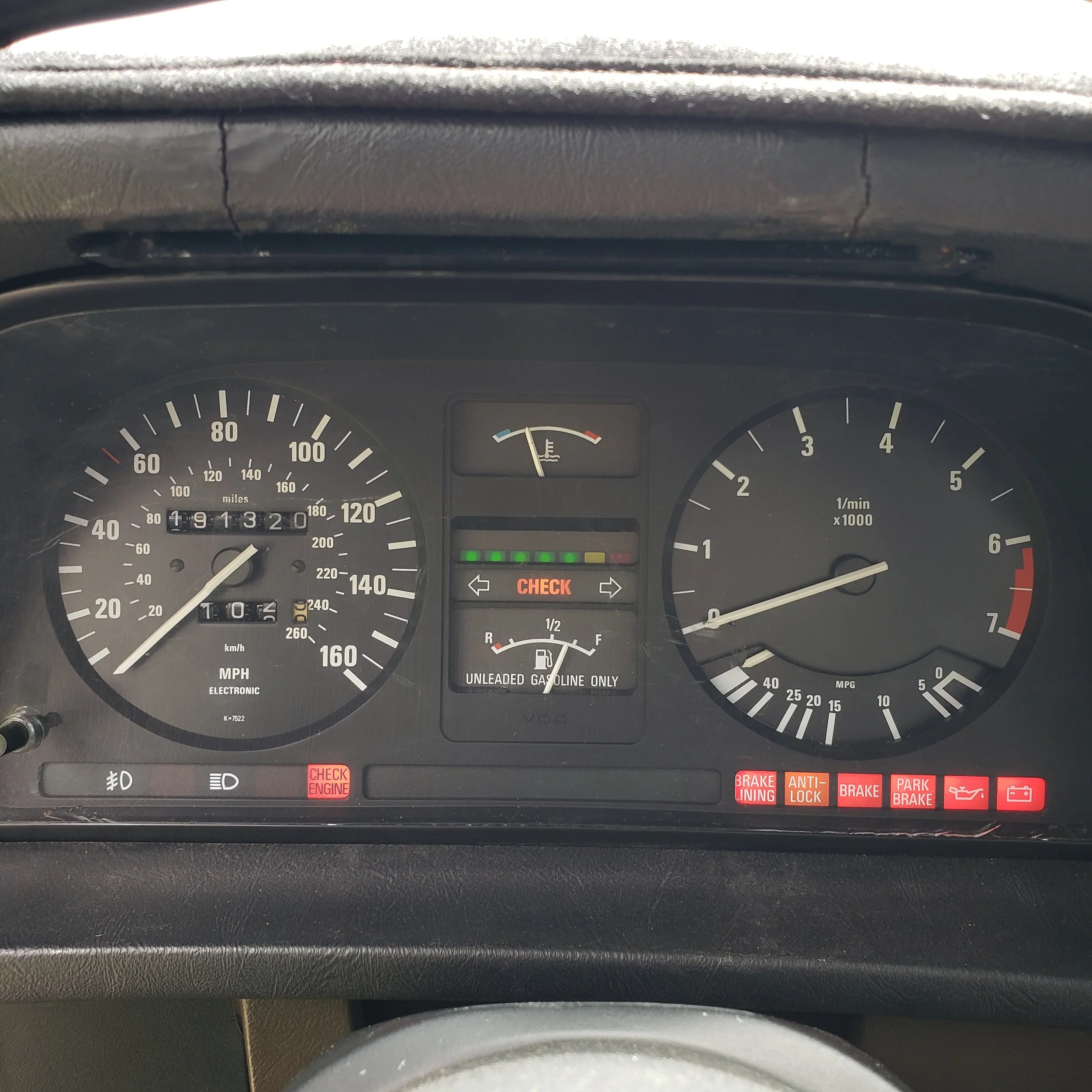
This is where things got a little dicey.
I did have to buy a cluster. No big deal. I’m one of those people who needs everything to work. At least 99% of it. All the windows need to roll up and down. All the little dash lights. Every gauge has to function. I even made sure that cruise control was working.
I even ran a wire to the cluster so I could have a working stomp test for OBD1 diagnostics.
To make my life a little easier, I spent the money on a premade plug-and-play engine harness adapter.
Little did I know and apparently the company didn’t either, the E28 diesel chassis uses a completely different C101 pinout.
So what happened when I plugged it in and tried to start the engine?
Nothing.
After a little research, I figured it out. That led me to scrap the adapter completely and dive into my own schematic and pinout research to wire everything correctly.
Not a huge deal. Just time… and a little brain work.
Once that was sorted, it was finally time to try again.
I’ll spare you all the other little nuances that come with getting an engine to fire — especially on a custom swap. There’s always something.
But eventually…
It started.
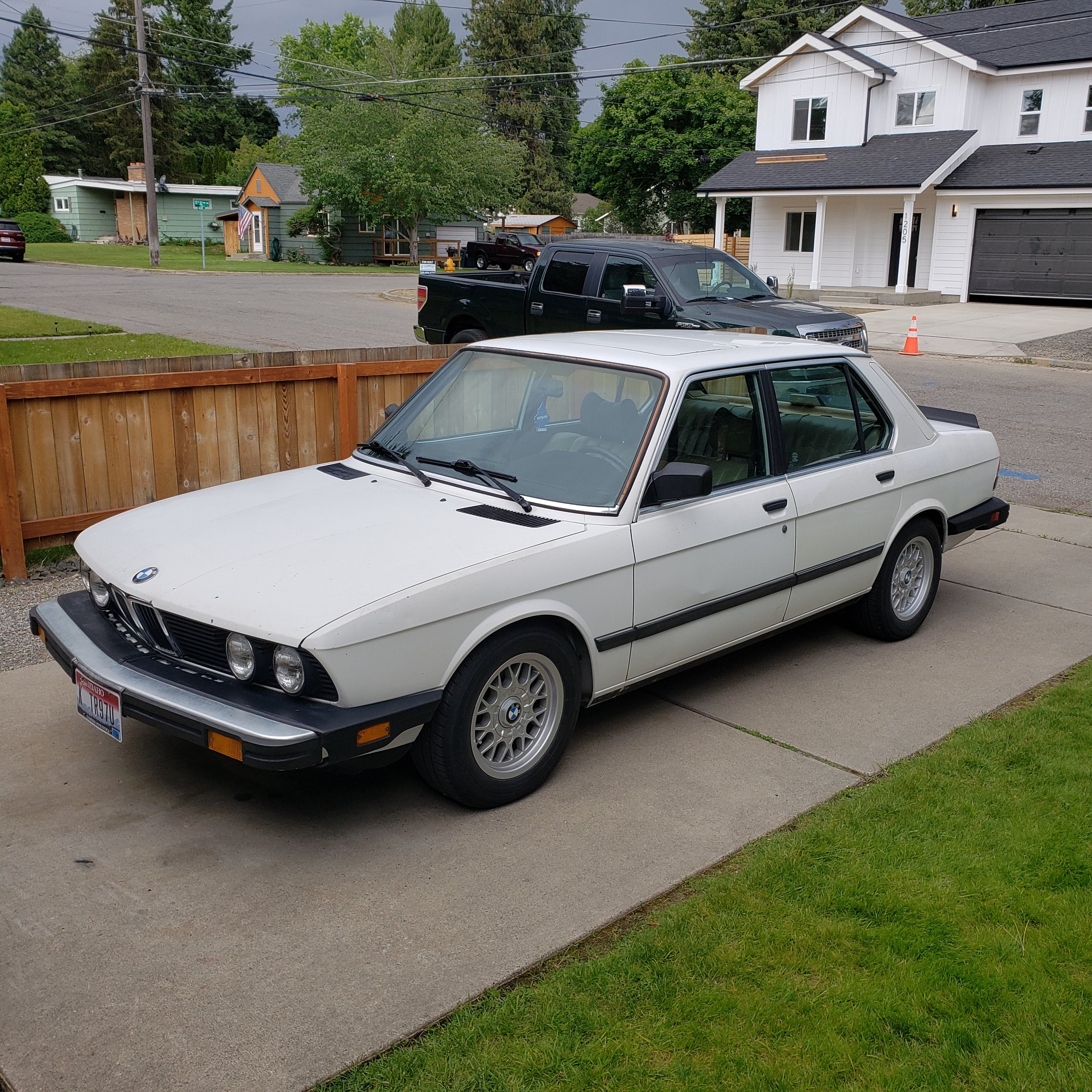
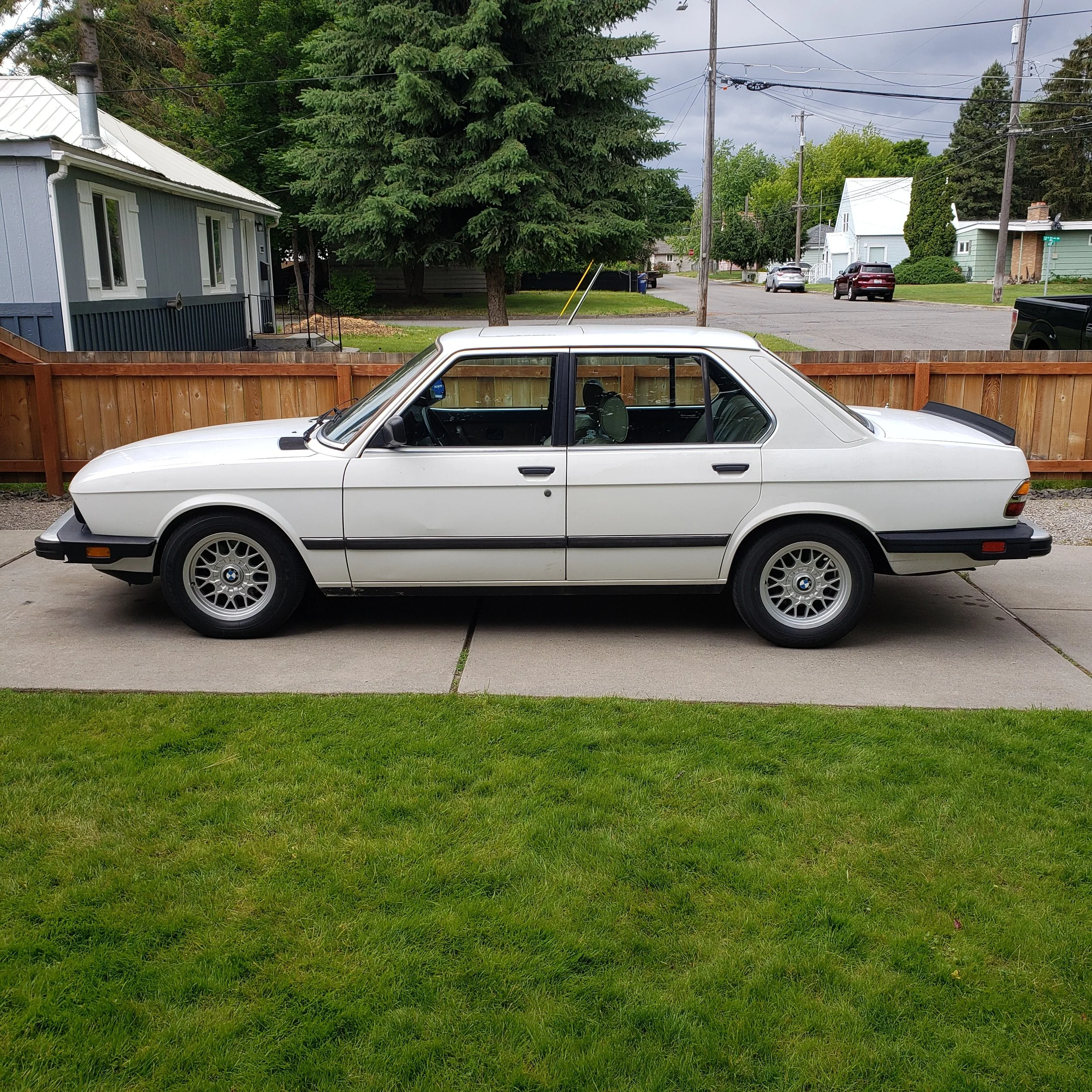
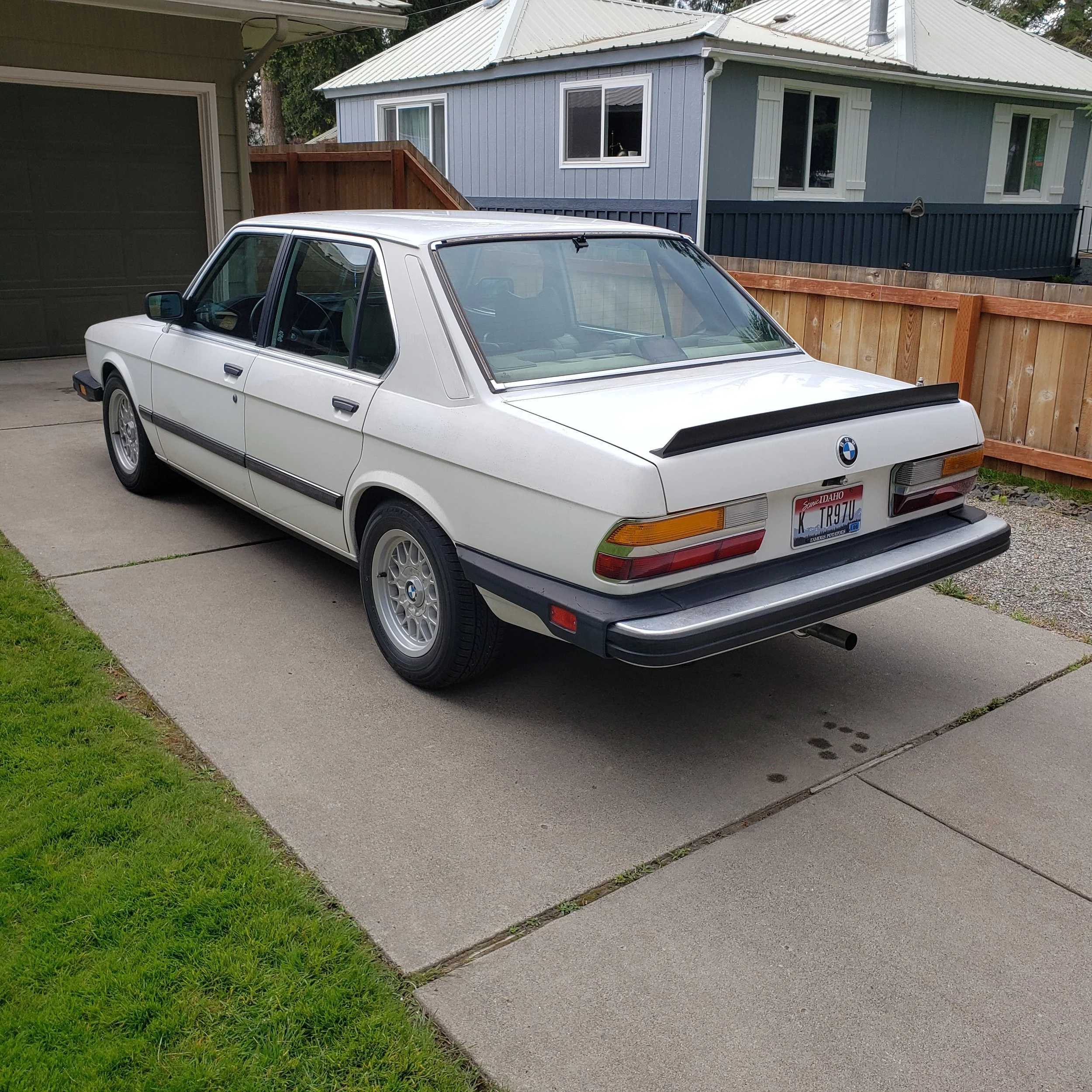
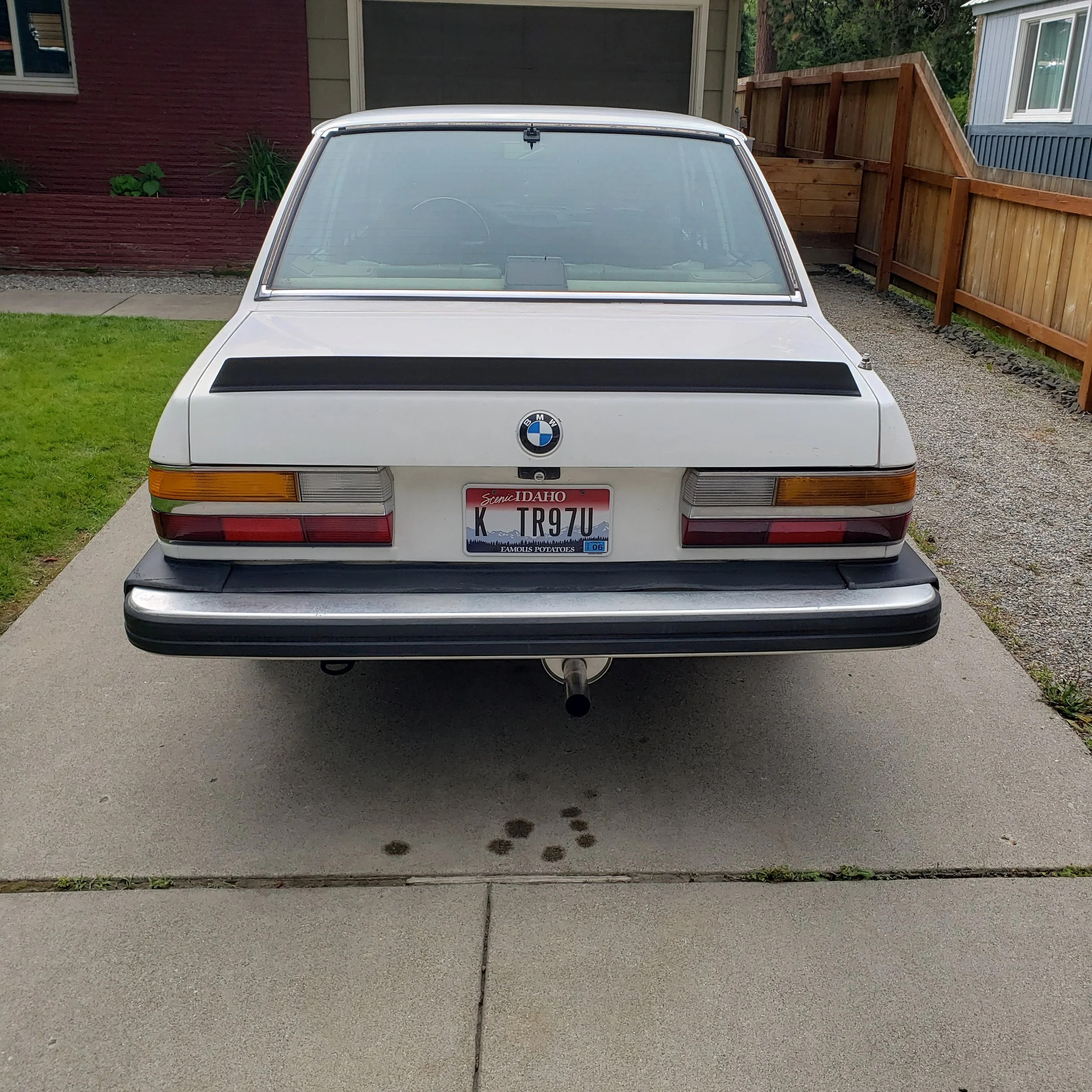
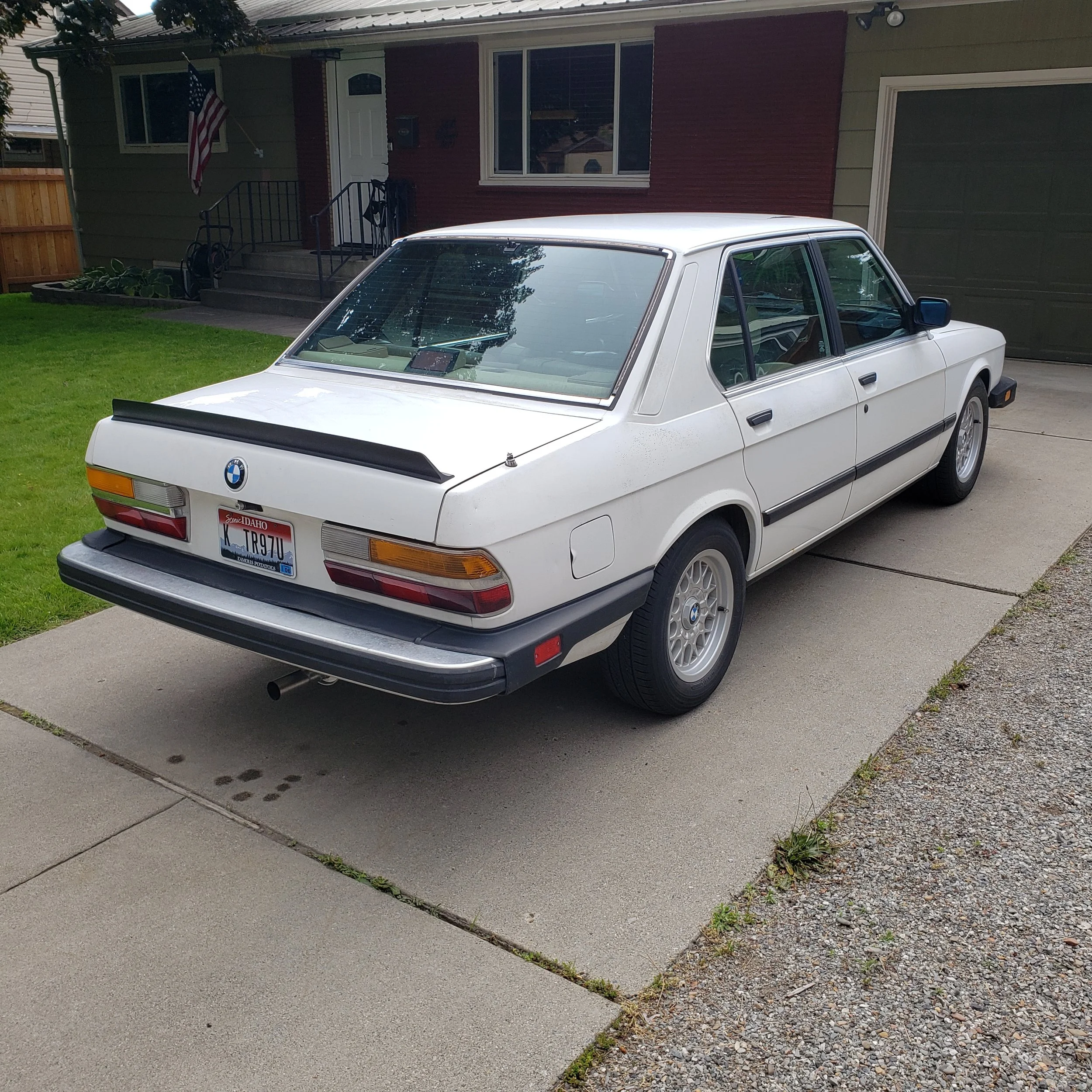
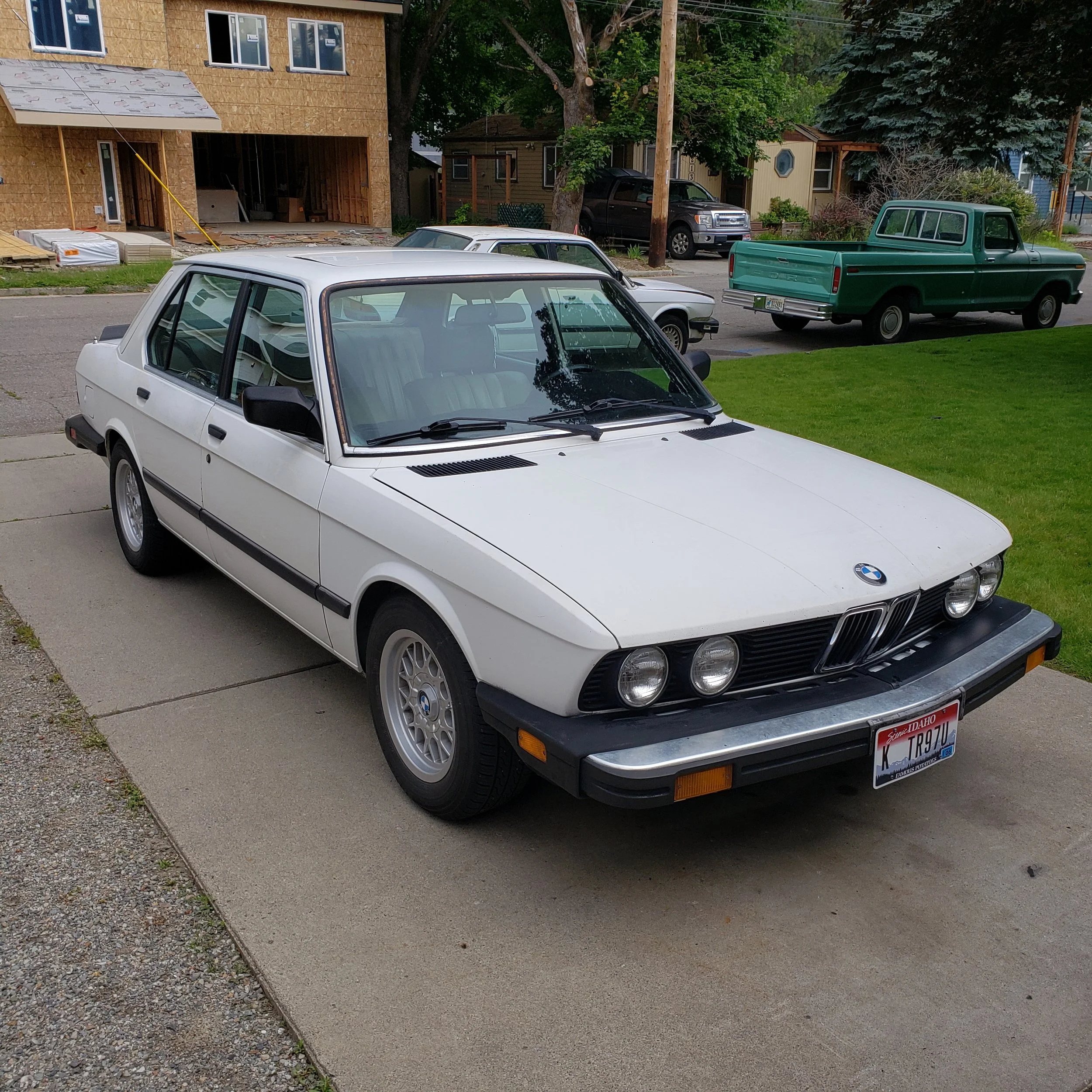
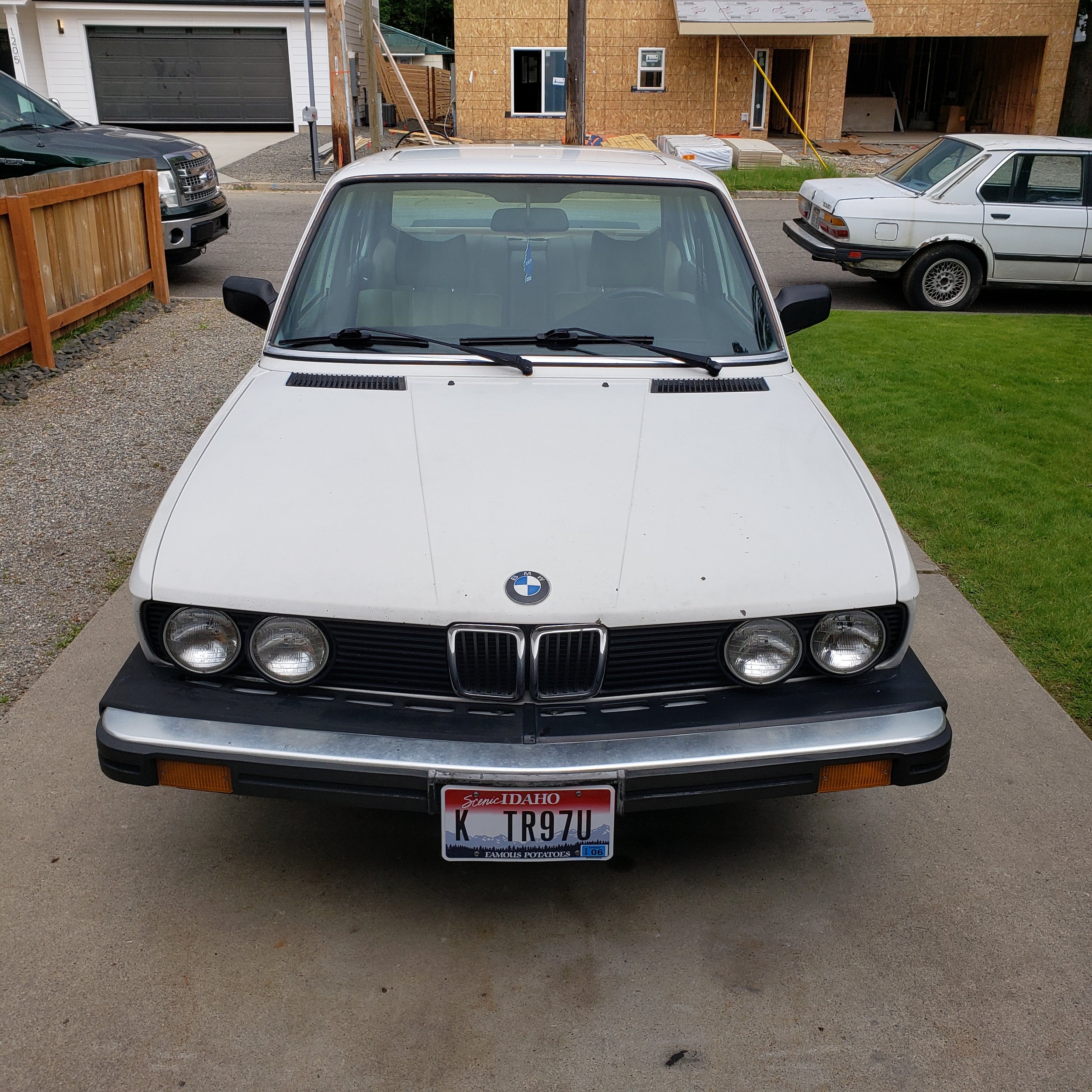
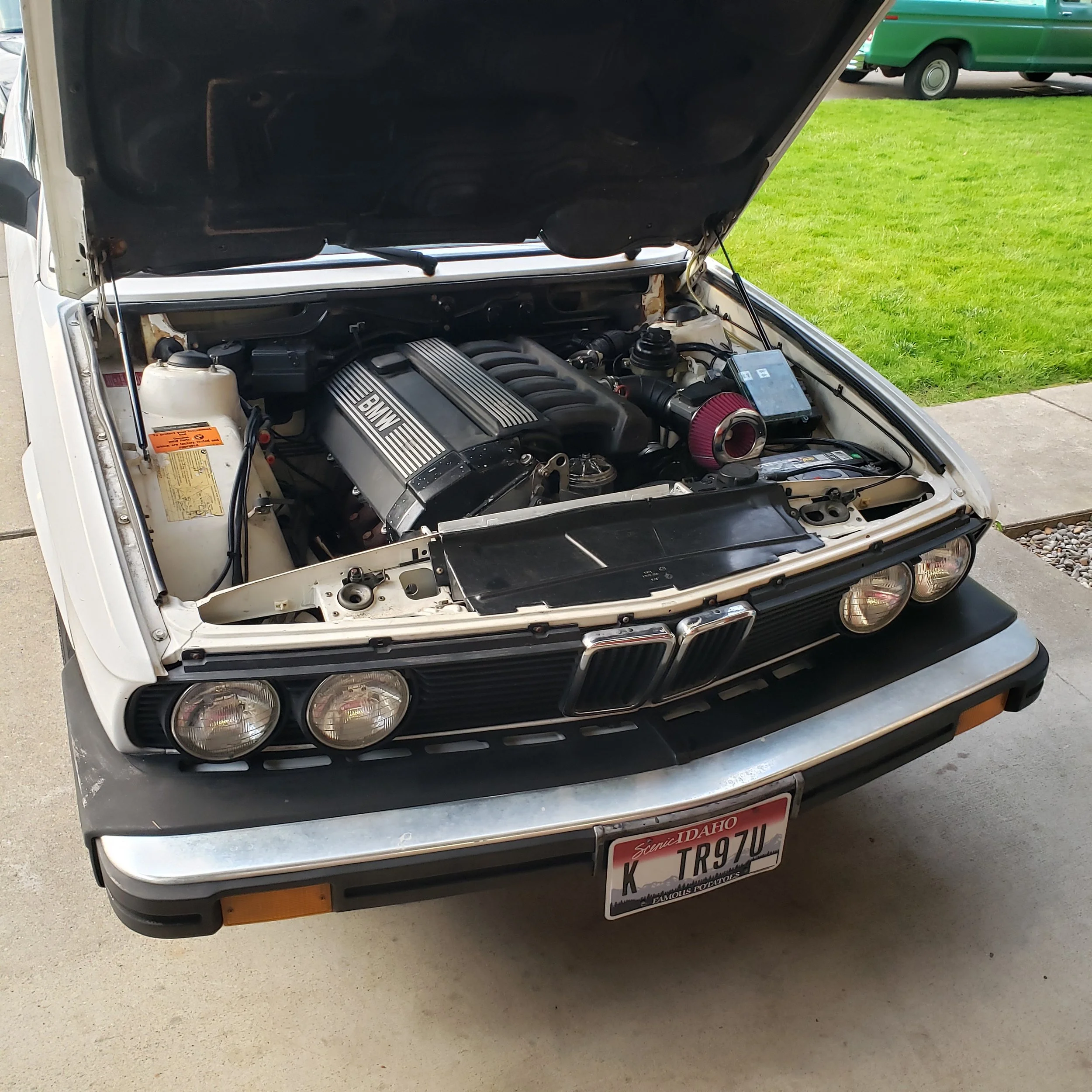
In conclusion, this was such a fun build and an incredible learning experience. I’m really happy with how it turned out, especially for a car that was originally just meant to drive down the road.
I added a few extra touches to make it more appealing to buyers, like the seats, sound system, a set of Style 29 wheels, and a trunk lid spoiler to finish it off.
I would do it all over again in a heartbeat.
Here is a full list of he new parts I installed:
Engine & Cooling:
Full gasket service
Wired oil pump nut
Radiator + hoses
BMW blue coolant
Fresh oil & filter
Fuel & Air:
In-tank + inline fuel pump
Fuel filter
MAF
Intake boot & filter
Drivetrain:
Resurfaced flywheel
Clutch master & slave
Braided clutch line
Transmission mounts
Carrier bearing
Redline MTL flush
Brakes:
Brake fluid flush
Rear inner & outer hoses
Suspension & Steering:
Upper & lower control arms
Tie rods
Sway bar links
Rear dog bones
Alignment
Electrical & Misc:
Crank sensor
Reverse light switch
Brake booster
Throttle cable & bushings
Motor mounts
Hood shocks
OBC screen
Wiper blades
Window / door / trunk seals
Full exhaust
The car eventually sold for right around $6,000 to a young gentleman who drove over from the Seattle area with his dad. They already owned an E28 and wanted to add another to the fleet, a father-and-son E28 duo.
I couldn’t have asked for a better ending to the story of a once-forgotten E28 that had been sitting and rotting away in a small Idaho mining town.
At least, that was the end of it for me.
Aaron Smith
02/11/2026